
A breakfast nook only works if you can actually sit in it. Plenty of corners look cozy and still leave you wedged between a table leg and a wall.
I gathered 33 nooks, from built-in banquettes and bay windows to patterned corners and cafe-style round tables, with the measurements that keep each one comfortable.
Read the five rules first. They apply whether you have a bay window or a bare wall.
Five Rules for a Nook You'll Actually Use
- Seat height is 17 to 19 inches, table height is 29 to 30. Get those two right and everything else is decoration.
- Allow 24 inches of table edge per person. A 36-inch round table seats two comfortably and four tightly.
- Leave 36 inches to walk behind a chair. Less than that and the nook turns into an obstacle in your kitchen.
- Hang the light 30 to 36 inches above the table. Any lower blocks faces across the table, and any higher leaves the tabletop dim.
- Give the bench a firm, wipeable cushion. Two to three inches of high-density foam in a washable cover survives crumbs and coffee.
Built-In Banquettes and Storage Benches
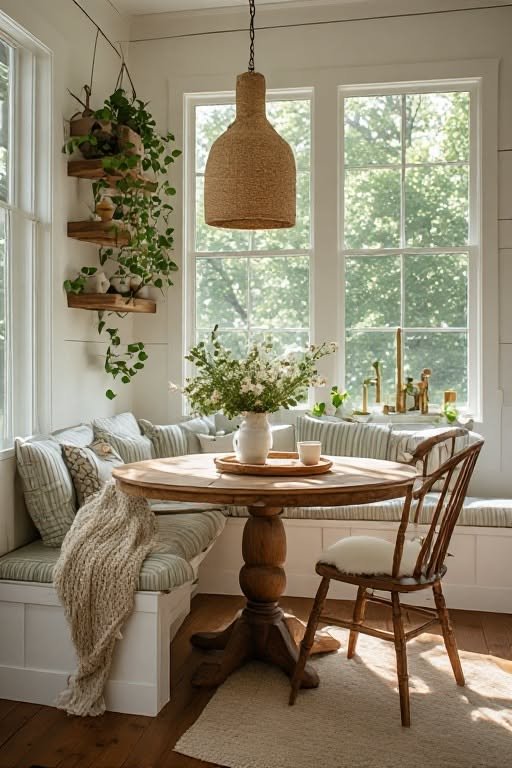
01A Curved Bench Around a Pedestal Table
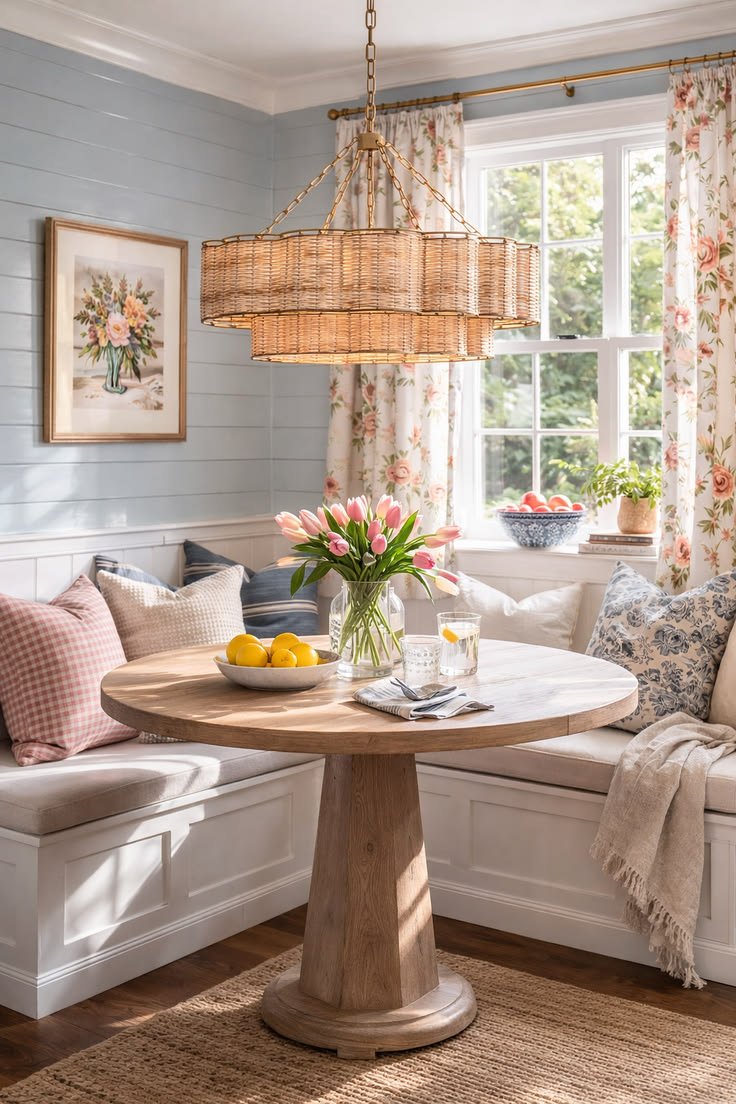
Round tables and curved benches belong together. The bench follows the wall, and a pedestal base leaves knees free.
Keep the seat about 18 inches high and the table top 29 to 30 inches. Leave 10 to 12 inches between the seat edge and the table so people can slide in.
Mount a couple of narrow shelves above the window for plants. The greenery frames the view without using any table space.
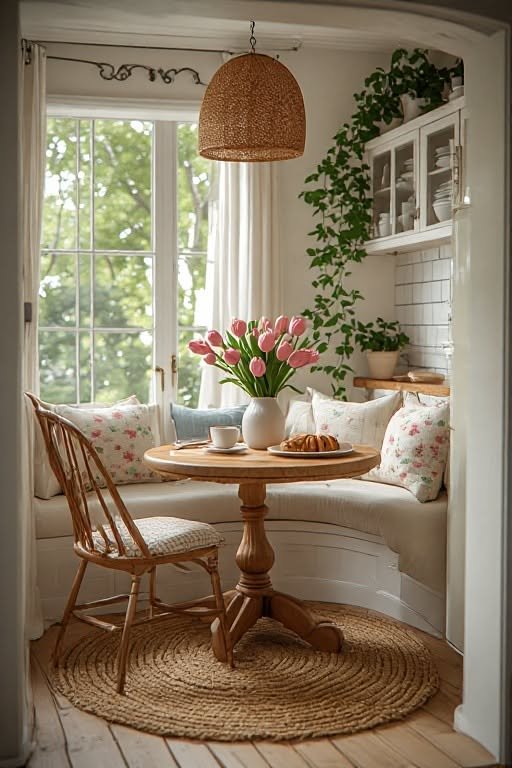
02An Alcove Banquette with a Woven Rug
Round rugs suit round tables. Choose one that extends 24 inches past the table edge so chair legs stay on it when you slide out.
Use a flat-weave jute, because deep pile traps crumbs and catches chair feet. Shake it outside weekly and vacuum without the beater bar.
03Blue and White Cushions on a Painted Bench
Blue and white is the safest nook palette, and it hides every kind of spill. Mix a stripe, a small print and a solid, and keep the blues in one family.
Vary the scale: one large pattern, one medium, one small. I put the boldest print on the cushions and keep the paint plain.
Choose a rope or wicker chandelier above the table to add texture without adding color. Hang it 30 to 34 inches above the tabletop. A 2700K bulb keeps the blues from turning cold.
04A Window Seat with Drawers Underneath
A bench is wasted if it only holds people. Build or buy one with lift-up lids or drawers and store table linens and seasonal dishes there.
Keep the opening on the side that faces the room, so you can reach it without moving the table. Add a lid stay so a lid never drops on fingers.
Line the inside with shelf liner to keep linens fresh.
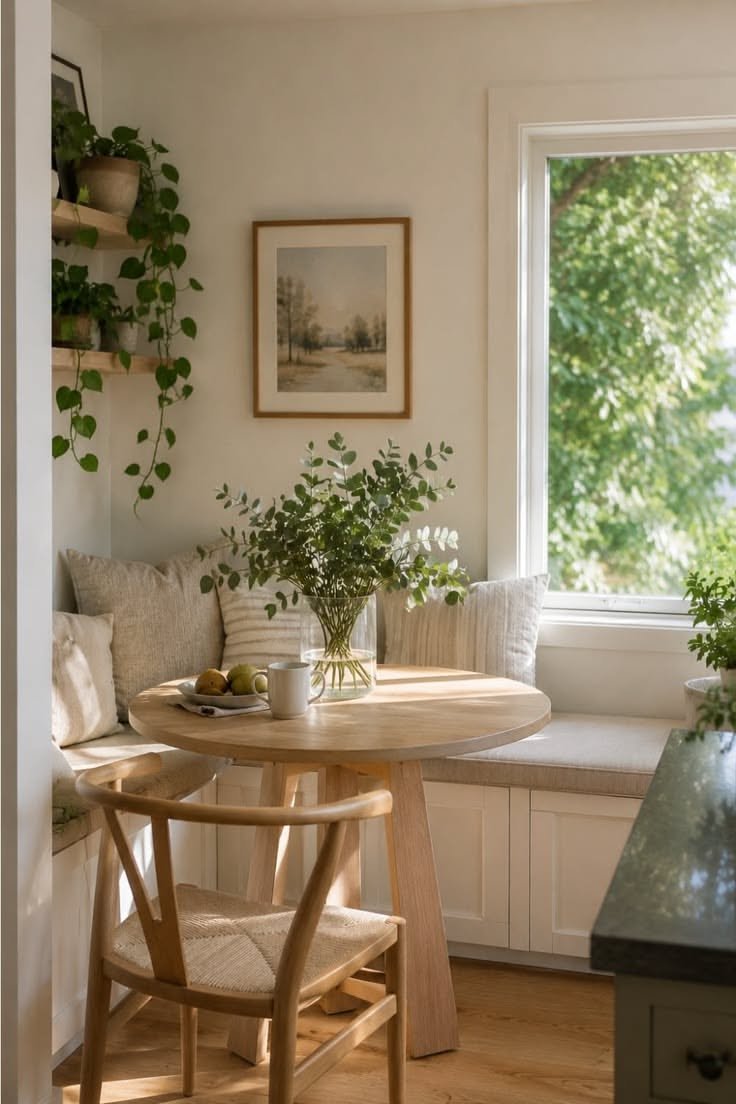
05A Reclaimed Wood Wall Behind the Bench
One wood wall changes a whole nook. Plank paneling costs less than tile and wipes clean with a damp cloth.
Seal reclaimed boards with a matte polyurethane so crumbs and steam don't stain them. Two thin coats beat one thick one. Sand lightly between coats.
Check old boards for nails and flaking paint before they come indoors. Paint from before 1978 may contain lead, so test it or choose new boards aged with stain. Run the planks horizontally to make a narrow nook feel wider.
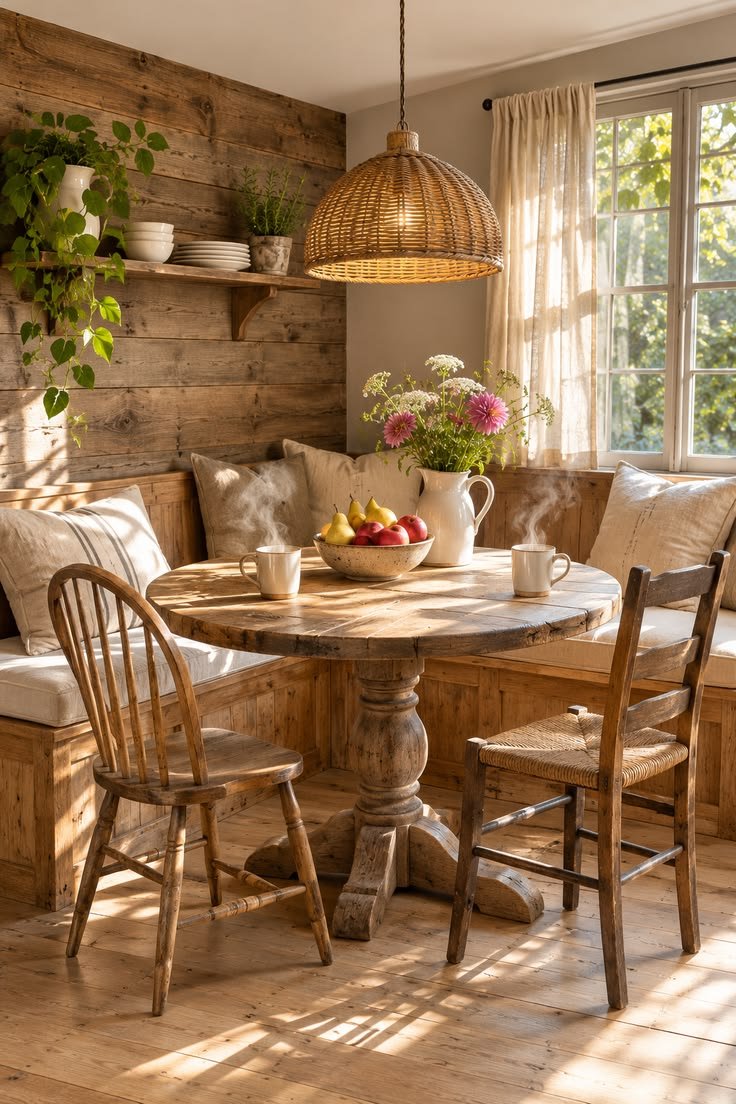
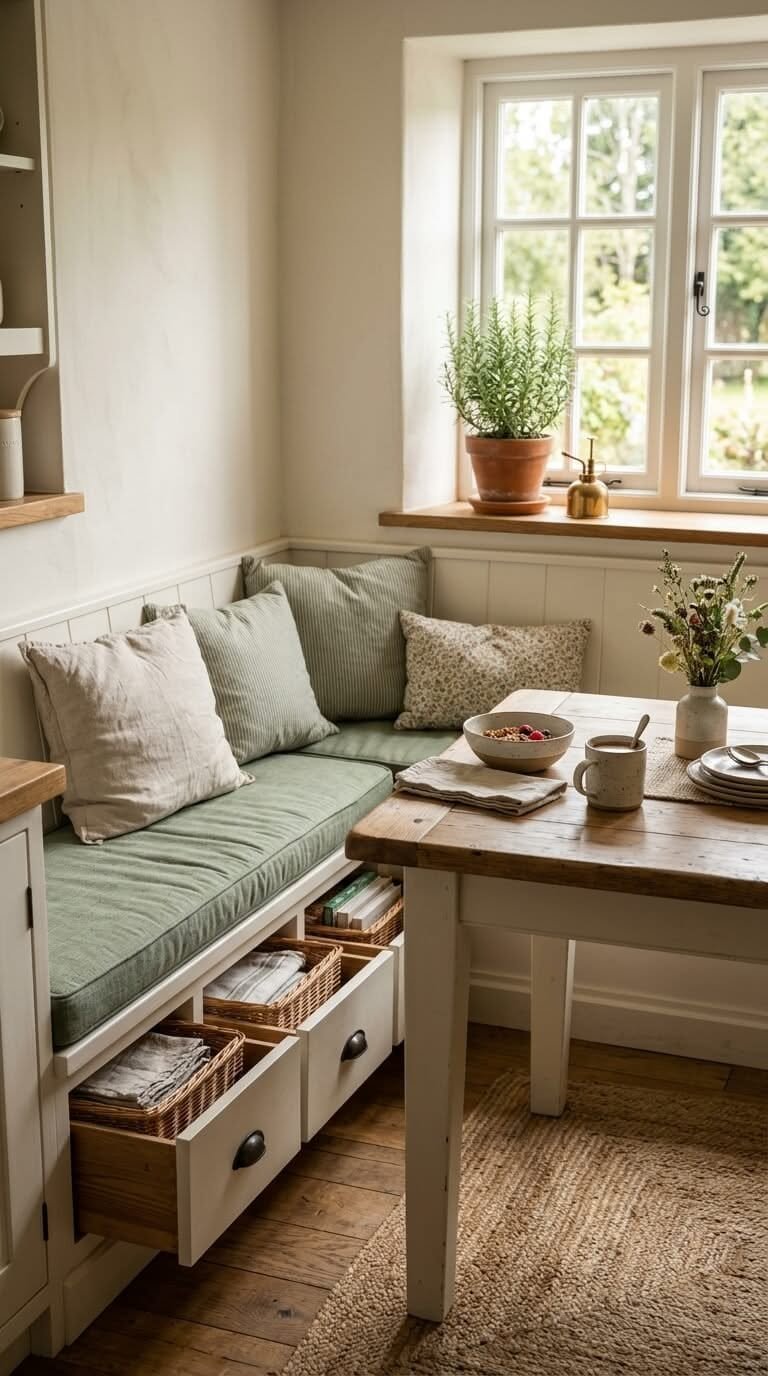
06A Pull-Out Drawer Bench for Cookbooks
Drawers beat lids in a tight nook, because nothing has to be lifted off first. Pull-out drawers at the bench's end hold cookbooks and placemats.
Use full-extension slides rated for at least 75 pounds so a loaded drawer glides. Keep the heaviest books in the bottom drawer.
A green cushion with a few neutral pillows keeps the corner calm.
07Roman Shades and Sconces over the Bench
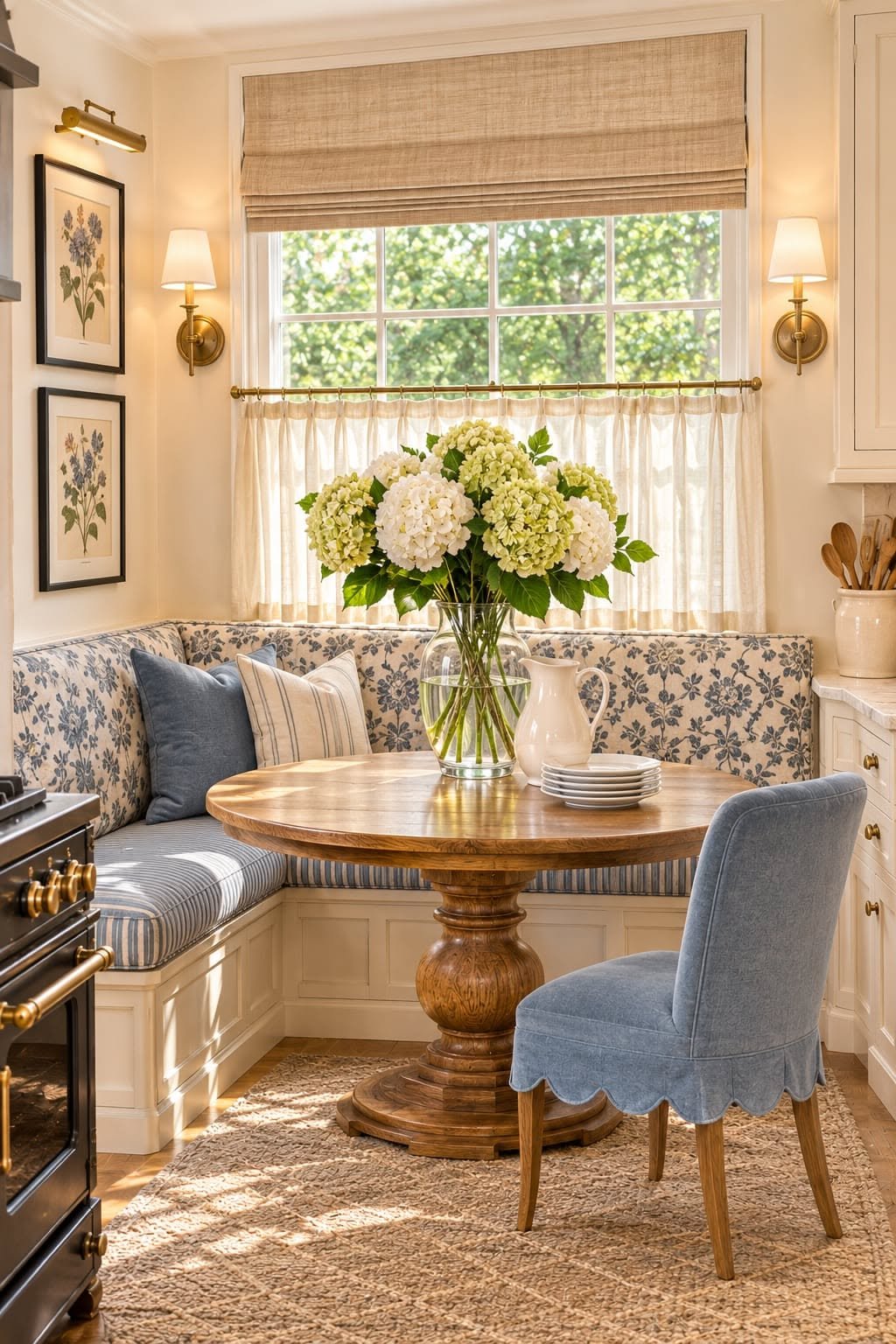
Why crowd the table with lamps? Wall sconces on both sides of a window light the bench and free up the table surface.
Use plug-in versions if you can't open the wall. Hang the center of each sconce about 60 to 66 inches from the floor. Hide the cord in a paintable cord cover.
A woven Roman shade filters morning light, so you can eat without squinting. Choose a lined one if the window faces east.
08A Farmhouse Table with Pastel Pillows
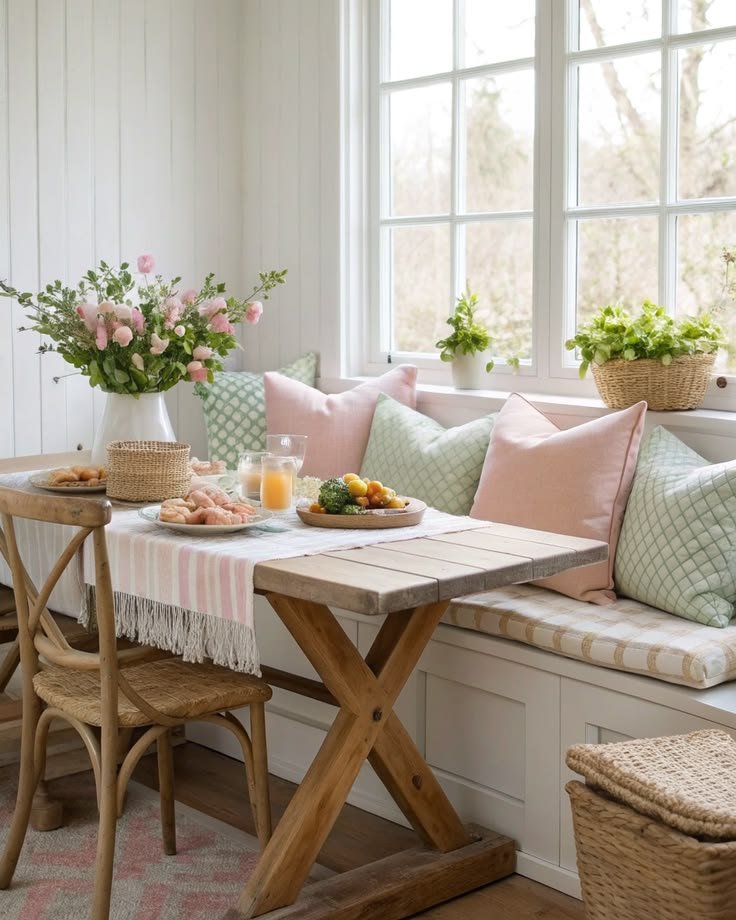
A trestle or X-leg table seats more people than a pedestal, since legs sit at the ends. It works for families who eat in shifts.
Pastel pillows and a striped runner make the corner feel like spring without a new purchase. Swap them for deeper tones in fall.
Bay Windows and Sunny Corners
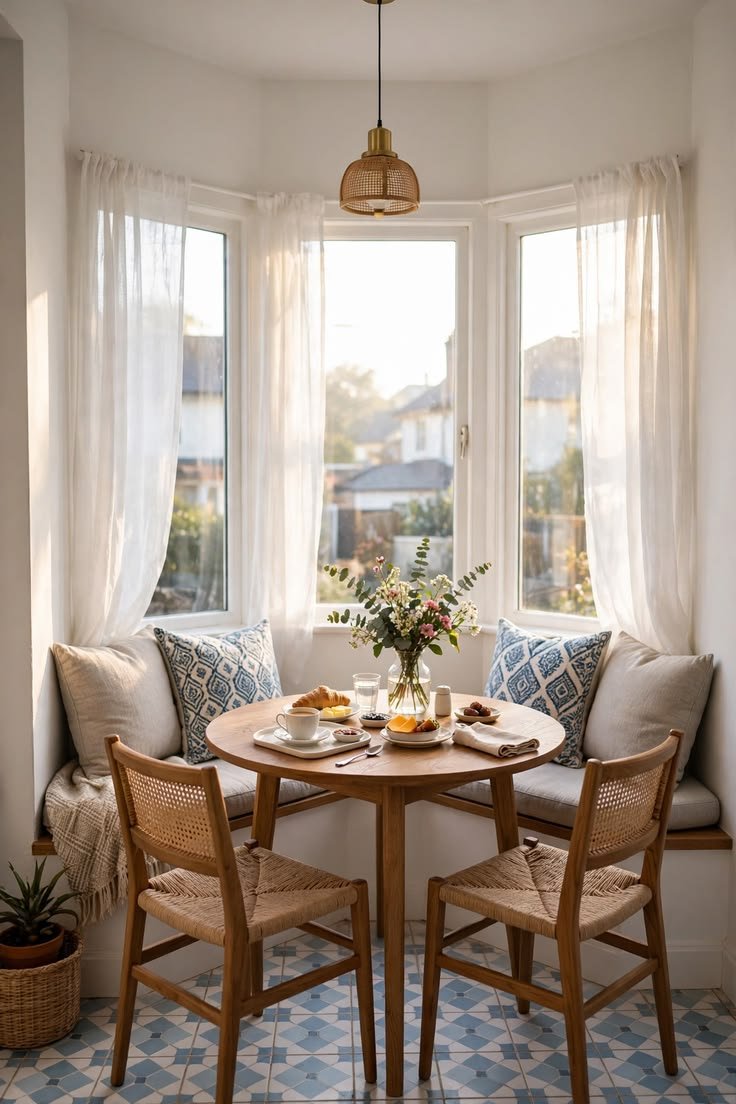
09A Bay Window with Sheer Curtains
A bay is the best nook location, so don't block it. Hang sheer panels outside the frame so they soften the view and don't cover glass. Mount the rod 4 to 6 inches above the window and let the panels brush the floor.
A small pendant fixes the light at night. Pick one with a 12 to 16 inch shade for a bay this size. Hang the bottom of it 30 to 34 inches above the table.
Put it on a dimmer. Bays lose heat, so check the window seal before winter and add a thick seat cushion that insulates.
10A Window Corner with a Small Pedestal Table
Tight corner? Choose a 30-inch round table and two chairs rather than a bench for four. It'll leave room to move.
Put the tallest piece, such as a plant, in the opposite corner so the window stays clear. Leave at least 36 inches of walkway around the table. Pull one chair out and check the swing before you buy.
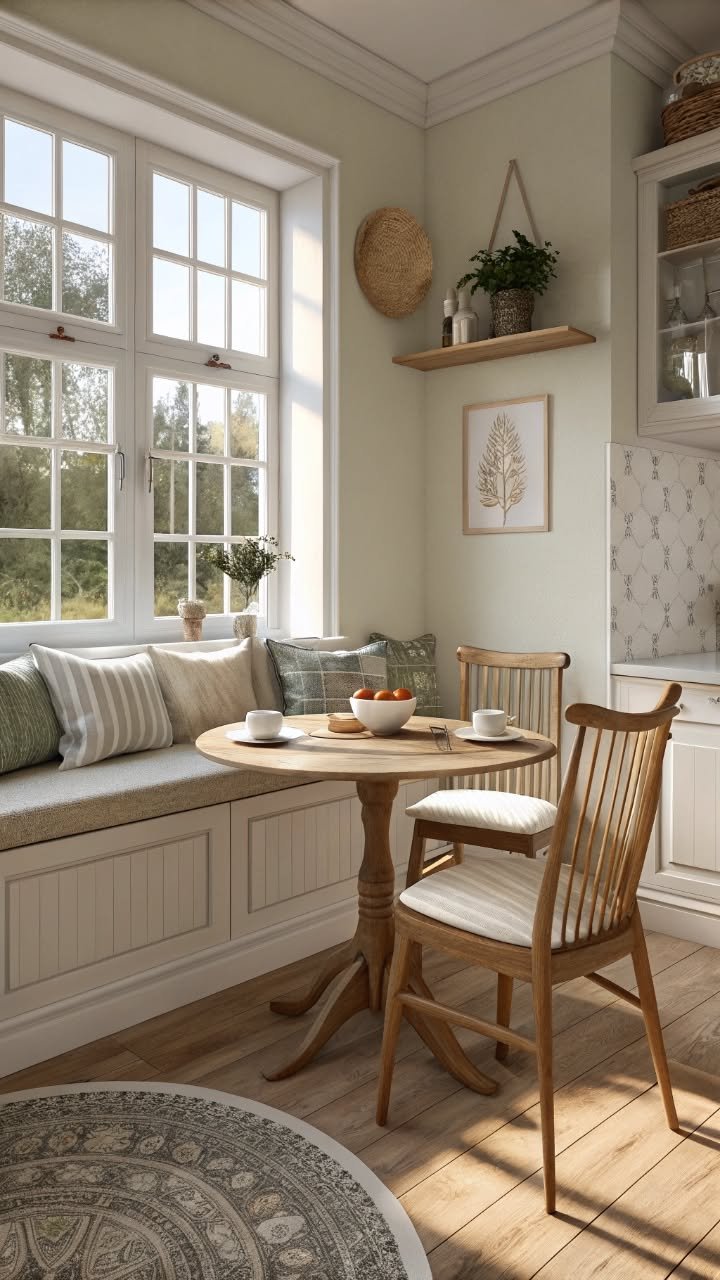
11A Narrow Bench and a Stool Table
You don't need a dining table to have a nook. A small round table at 24 inches across works for coffee and a newspaper.
In my own home, a table this size holds two mugs and a plate and nothing more. That limit is the point.
Use a washable linen pillow cover in a muted blue or sage so you can toss it in the wash weekly. Wash it cold and line dry to avoid shrinking. Keep a spare cover in a drawer.

12A Wraparound Bench in a Bay
Custom benches fit bay windows best, but a ready-made curved sofa cushion on a plywood base gets close for far less. Cut the plywood to a template made from kraft paper taped to the floor.
Hold the seat height at 18 inches and add a thin back cushion so people can stay at the table longer. Use 3 inches of high-density foam for the seat.
Cover it in a tight-woven fabric, which resists wear. Staple it to the underside of the plywood.
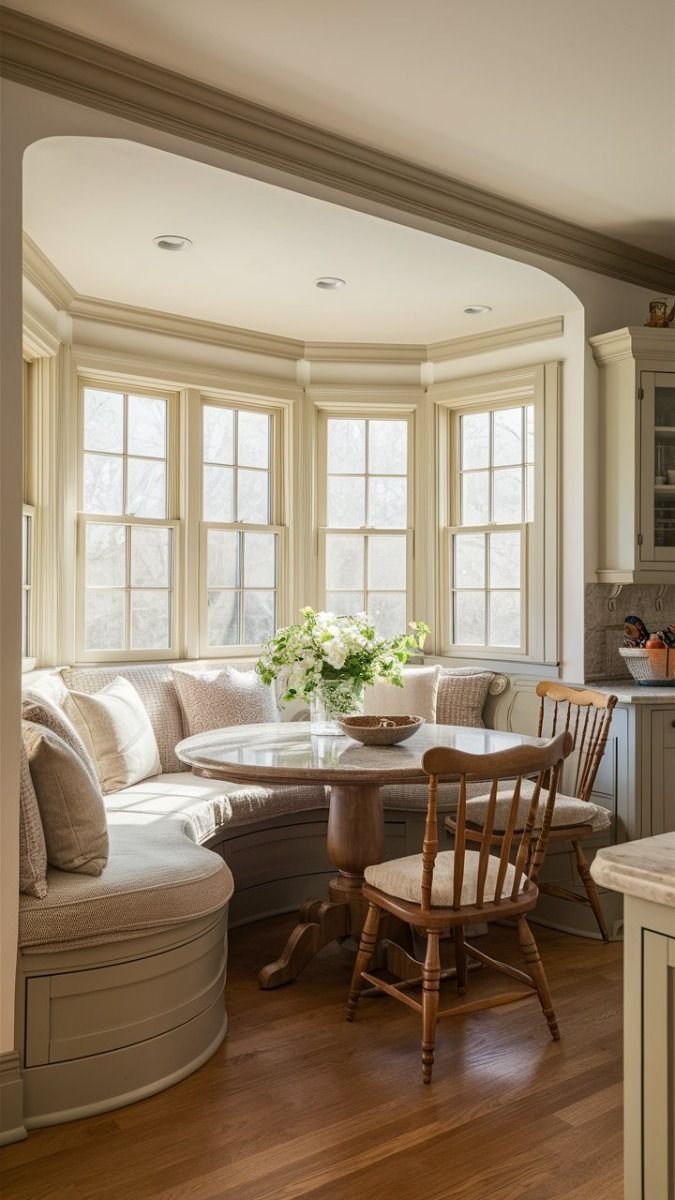
13A Breakfast Tray on a Round Table by a Bay
Make the nook the place you start the day by keeping it ready. A tray with plates and napkins beats clearing the table each morning.
Leave a throw blanket on the bench for cold mornings. Fold it over the back so it stays out of the crumbs.
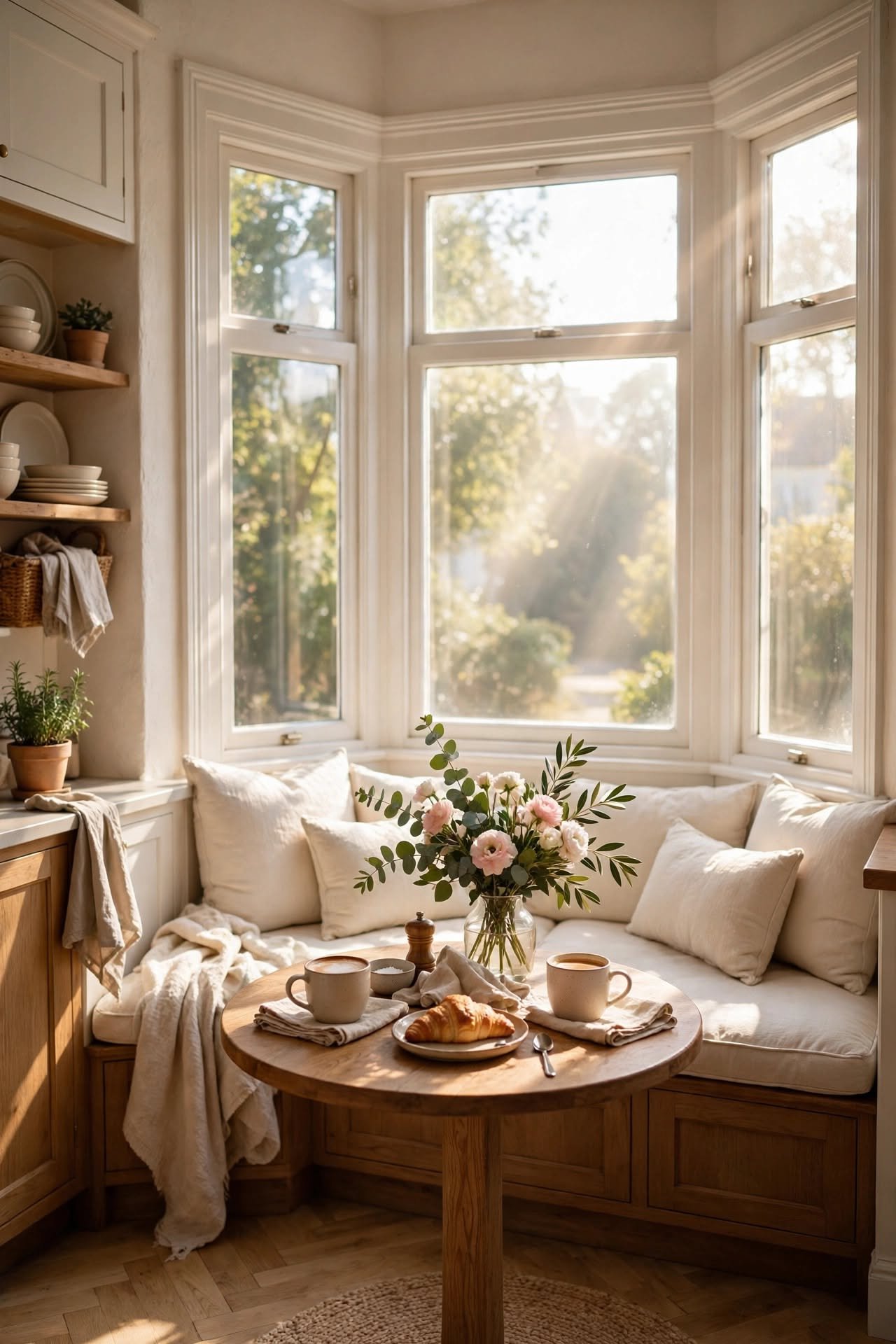
14A Sunroom Breakfast Spot with Rattan Chairs
Sun is welcome until noon. If your nook gets full light, add a roller shade, or you'll end up eating in the shade of the plant.
Choose a light-filtering fabric rather than blackout so the room stays bright. UV fades cushions, so rotate them each season.
Rattan chairs are light enough to move when you need space, and the cushions are easy to swap. Keep a fiddle leaf fig 3 to 5 feet from the glass in bright indirect light. Turn the pot a quarter turn every week so it grows evenly.
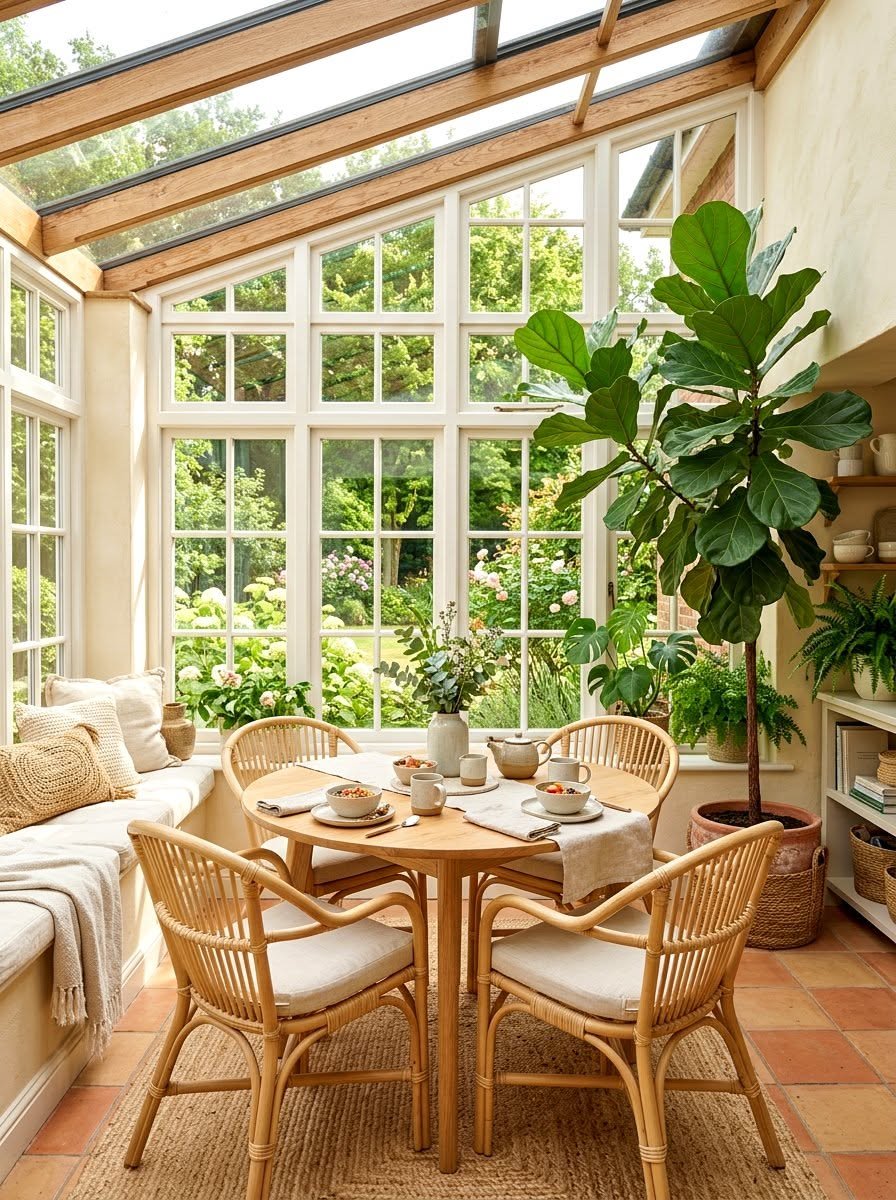
15A Nook at the End of a Kitchen Island
When the nook sits next to an island, line up the table with the island's edge so traffic keeps moving. Leave at least 36 inches between the two, and 42 if the island has stools.
A rattan pendant softens a hard stone floor, and a runner beneath the table reduces echo. Pick a low-pile runner so chair legs don't catch. A non-slip pad underneath keeps it from creeping.

Color, Wallpaper and Pattern
16A Sage Green Banquette with a Round Tulip Table
Paint the bench base a deeper shade than the walls and the nook looks built-in even if it isn't. I use a satin finish so scuffs wipe off.
A pedestal table with a black base looks sharp against sage, and it keeps legs out of the way. Black also hides scuffs from shoes.
Test three sage swatches on the wall and look at them at breakfast and at dusk. Green shifts a lot with light.

17Green Paneling with a Marble Table
Wainscoting is a quick way to add depth. Paint the top sage and keep the lower panel white. Set the rail about one third of the way up the wall, around 32 to 36 inches.
Use semi-gloss or satin paint below the rail, because that is where chair backs and elbows land. Caulk the seams before painting for a clean finish.
A marble-top table wipes clean in seconds, but use placemats to protect it from acidic juice. Citrus and wine etch marble. Reseal it once a year.
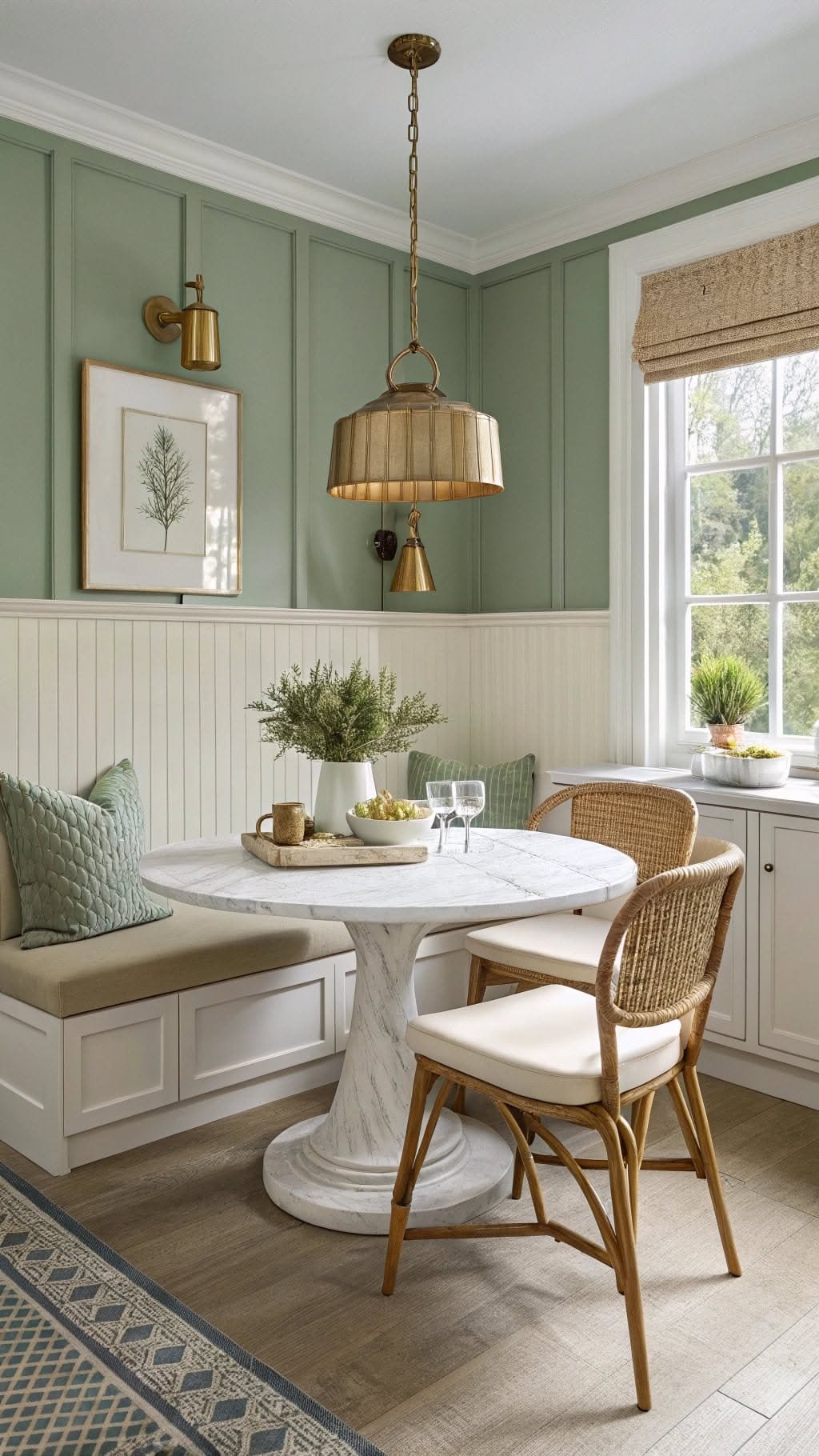
18Painted Panels and a Vintage Landscape
Old paintings give a nook character for little money. A thrift-shop landscape in a dark frame suits sage walls.
Hang art about 57 inches from the floor to its center, and a bit lower here because you're seated. Use a picture hook rated for twice the frame's weight.

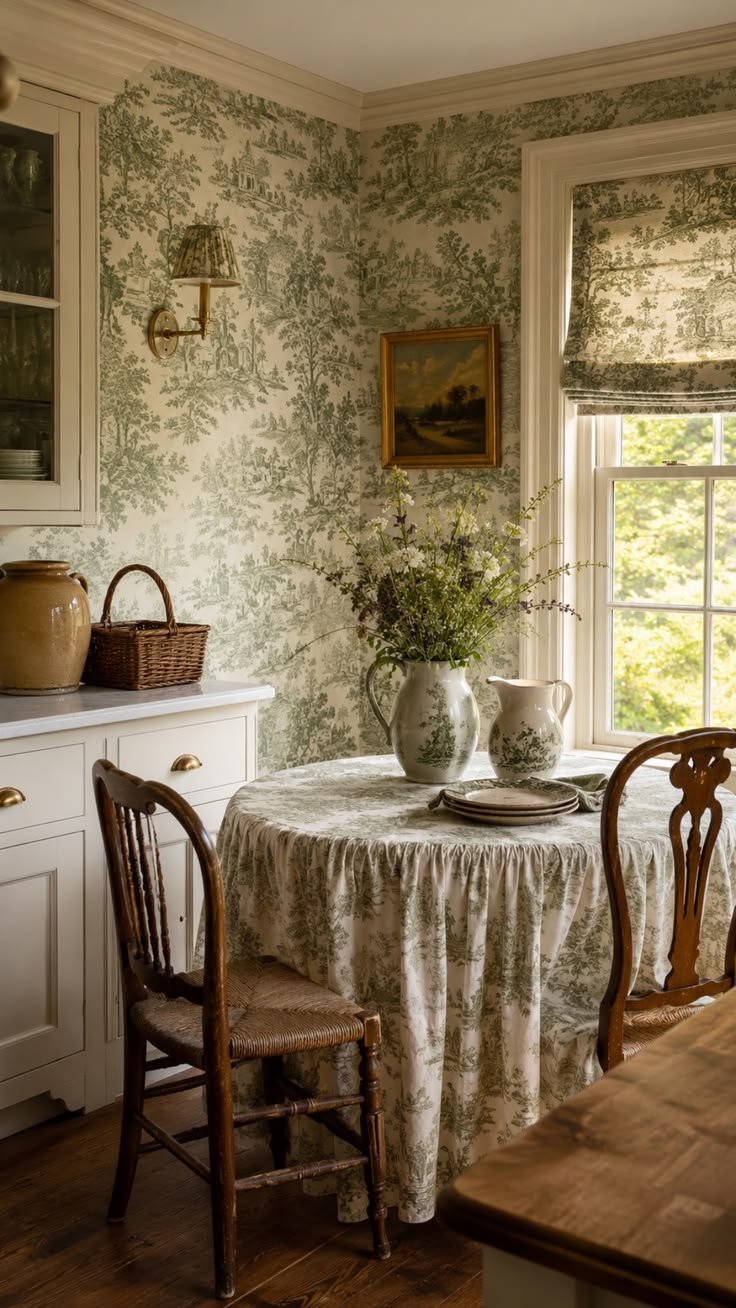
19Toile Wallpaper and a Skirted Table
Wallpaper works well in a nook because the area is small. One roll or two covers it and a pattern feels intentional.
Order one extra roll for pattern matching. Choose a scrubbable vinyl-coated paper near a table.
A table skirt hides the table base and gives you a place to hide a basket of napkins. Make it from a round tablecloth hemmed to graze the floor.
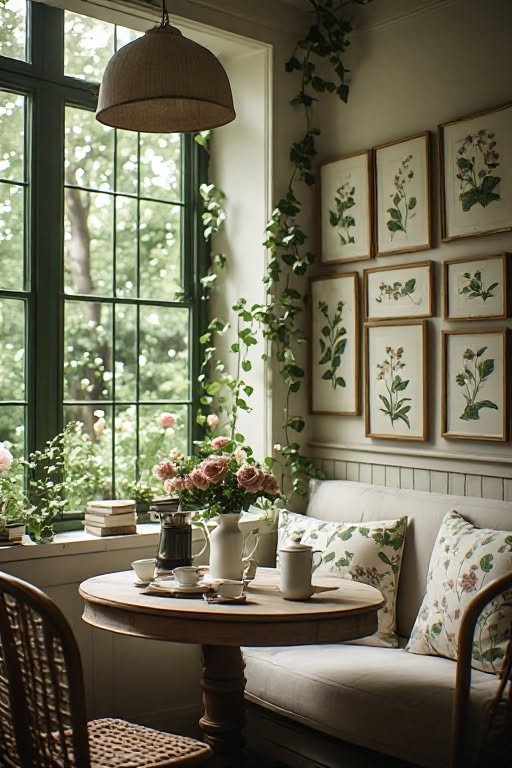
20Botanical Prints and Ivy by a Dark Window
Botanical prints in matching frames look curated. Place them in a grid with 2 inches between frames.
A trailing ivy plant on the window ledge adds living green, but check its watering rhythm before you commit. Ivy likes bright light and soil that dries slightly between drinks. It's toxic to pets, so keep it out of reach.
21A Bold Graphic Print over a Navy Table
A dark table needs warmth around it. A big graphic print gives a nook a modern edge, so keep the rest of the palette warm, with rust chairs and a striped rug.
Choose a rug with a pattern that hides crumbs, such as a narrow stripe. A flat weave in a 5-foot round suits a small table.
Pick one color from the print and repeat it twice more. I use a cushion and a bowl. Three repeats look planned, and one looks like an accident.

22Gingham Curtains and a Red Plaid Bench
Gingham is a classic cafe look, and one color is plenty. Red and white curtains with matching bench cushions make it a theme.
Keep the check small, around half an inch, so it reads as texture. A black pendant keeps the look from turning too sweet. Skip a second pattern nearby.

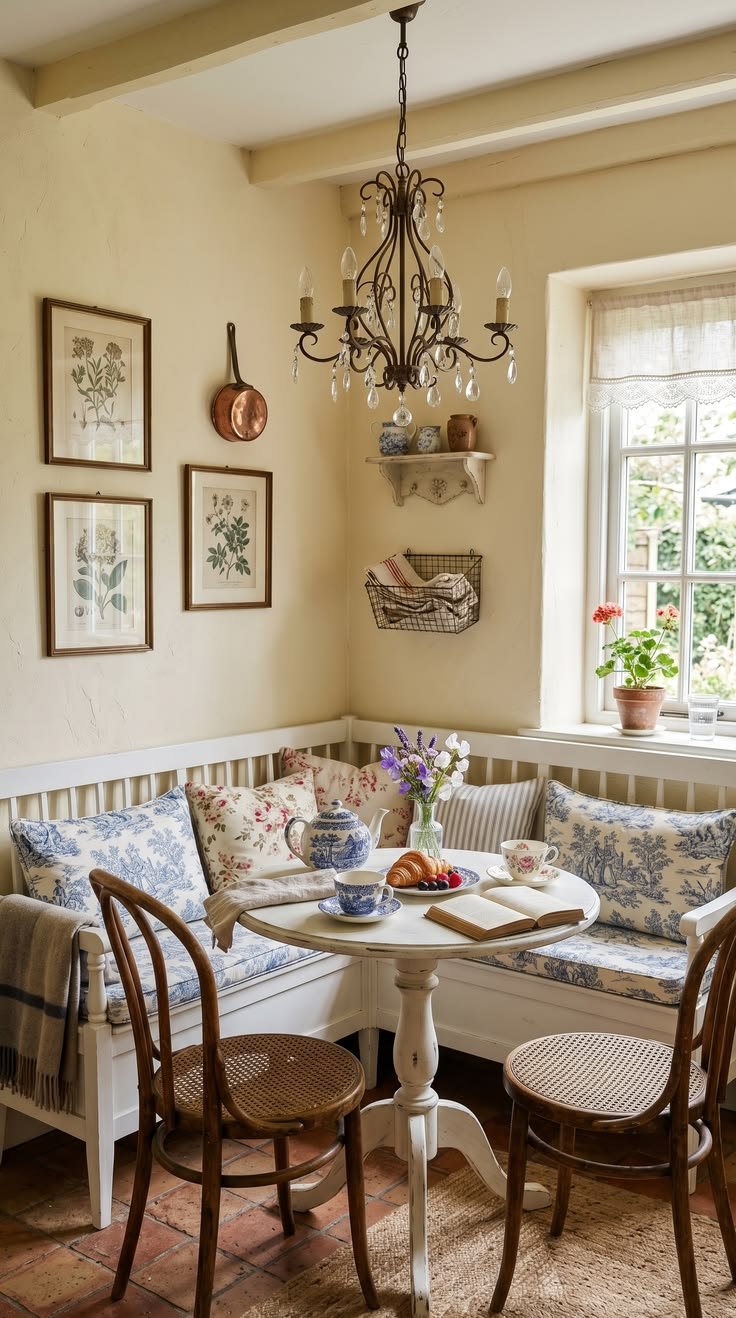
23A Cottage Nook with Botanical Art and a Chandelier
Mix blue and white toile with stripes and it looks collected rather than matched. Keep pattern scale different from one piece to the next. If two prints match in size, one will lose.
Hold the colors to two, plus white. That limit lets the patterns share a corner.
A small chandelier adds drama in a corner, but check that the ceiling height is at least 8 feet. Hang the lowest point 30 to 36 inches above the table. Dust it with a dry cloth once the bulbs are cool.
Round Tables, Chairs and Pendant Lights
24Curtain, Pendant and Cushion Corner
Soft light from a window plus a warm bulb makes the nook glow in the evening too. Pick a 2700K bulb for the pendant. Skip cool white, which makes food look flat.
Hang a linen curtain slightly wider than the window to make it look larger. Mount the rod 4 inches above the frame and extend it 6 to 8 inches on each side. Gauze lets light through while softening glare.
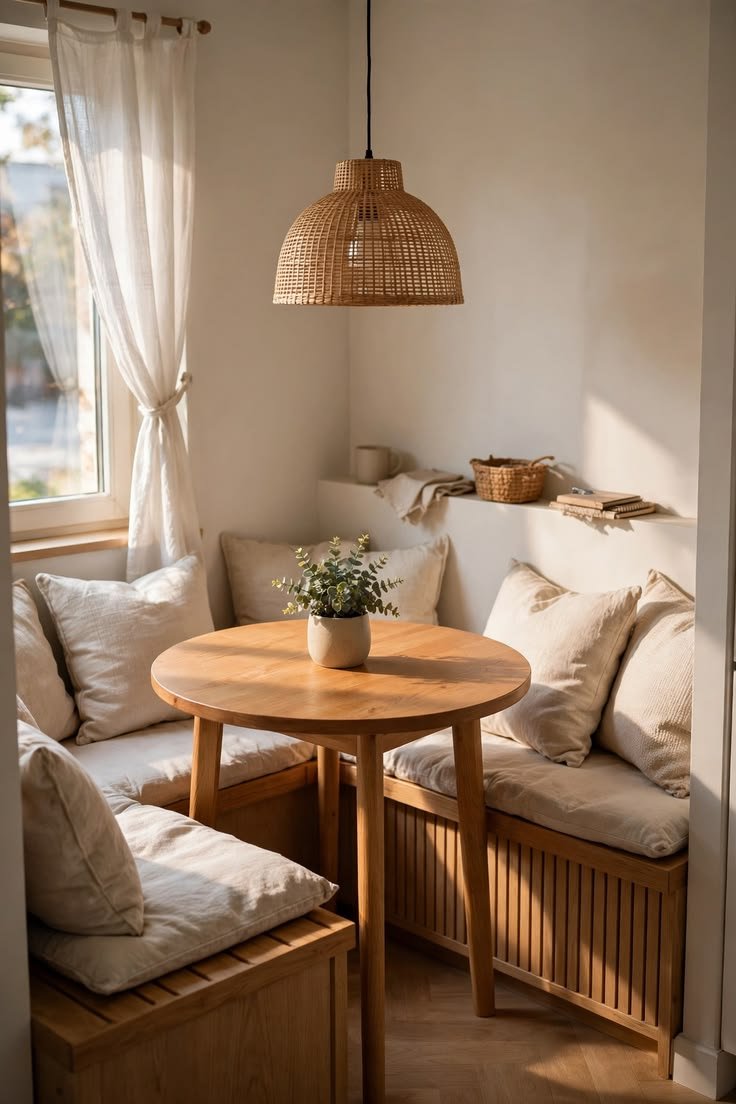
25A White Pedestal Table on a Round Rug
A white table brightens a dark floor, and the pedestal means no one has to straddle a leg. Wishbone chairs are narrow enough to tuck in fully, so the walkway stays open.
Wipe white lacquer with a soft cloth and mild soap. Dab spills at once.
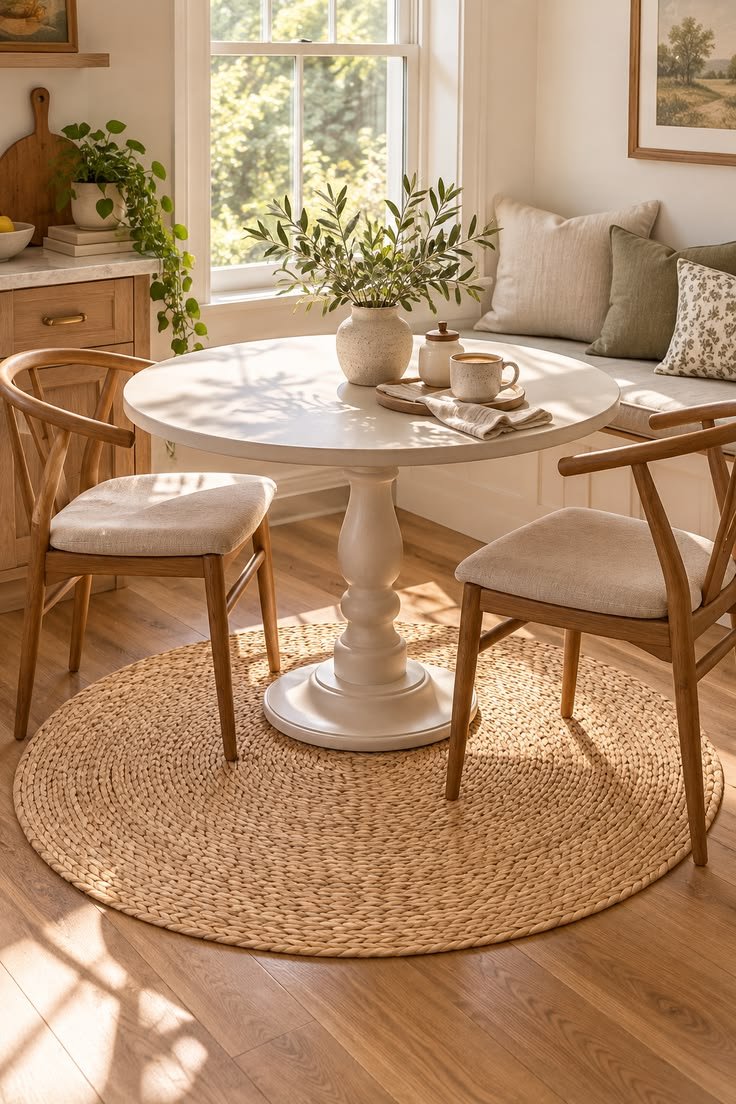
26A Driftwood Table in a Coastal Corner
Coastal nooks can handle rough textures. Pair a whitewashed wood table with blue-striped cushions and a woven pendant.
Skip delicate fabrics here. Sunlight and sea air fade cotton fast, so choose outdoor-rated stripes.
Choose brass or stainless hardware, since plain iron rusts in humid air. Leave a small gap between the table and the wall for airflow. Wipe cushions with mild soap and water when salt dust builds up.
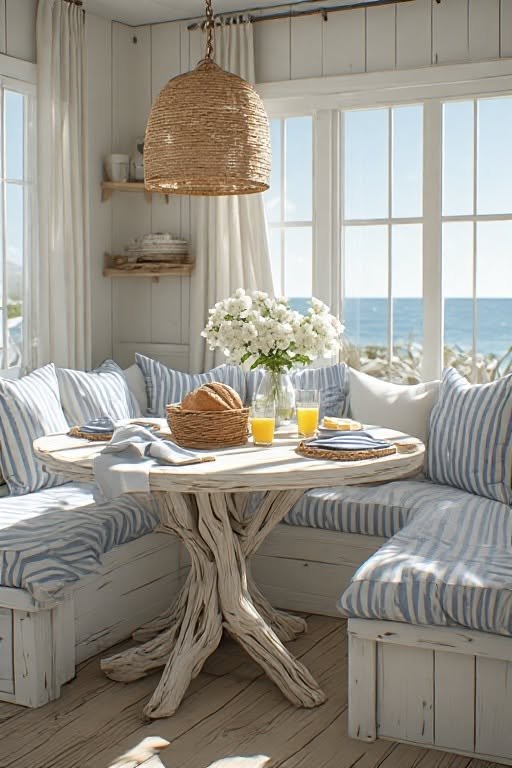
27A Pendant with a Ceramic Shade over a Bench Table
A pendant sets the mood. Choose a ceramic or glass shade and hang it low enough to feel intimate but not so low that tall guests hit it. A good height is 30 to 36 inches above the table.
Use a dimmer if you can, because breakfast and a late tea need different brightness. Check the fixture's wattage limit before you add a bulb, since ceramic holds heat.

28A Plaid Banquette with a Pedestal Table
A plaid bench pad warms up a white base. Pick a pattern with a mix of warm tones so it blends with wood.
Use a spindle-back chair opposite the bench, since it's easy to move and slim. Its open back keeps sightlines clear across the room.
Add ties to the pad so it doesn't slide. A 2 to 3 inch cushion is enough for a short breakfast.

29A Corner Shelf Wall Above a Small Table
Floating corner shelves turn a bare wall into storage. Stagger the heights and keep each shelf at about 10 inches deep. Fix them into studs, or use anchors rated for the load.
Display things you use, like mugs and bread boards. They add character and stay handy.
Keep the heaviest items on the lowest shelf. Leave a third of each shelf empty.

30A Neutral Corner with Linen Curtains
A neutral nook still looks rich if you layer textures: linen curtains, a boucle cushion, a stoneware bowl. Aim for at least three different textures.
Upholstered chairs are comfortable, but pick performance fabric so spills wipe off. Dab a drop of water on a sample first, and it should bead. Keep every color within one shade of cream.

31A Marble Round Table in an Open Kitchen
If the nook is part of an open kitchen, match the table to the counters so it doesn't look like it landed there. Repeat one finish, such as the stone or a metal.
Add a jute rug under the table. It anchors the area and defines it from the kitchen. Choose a size that lets chairs stay on it when pulled out.
Keep the table 3 to 4 feet from the counter.
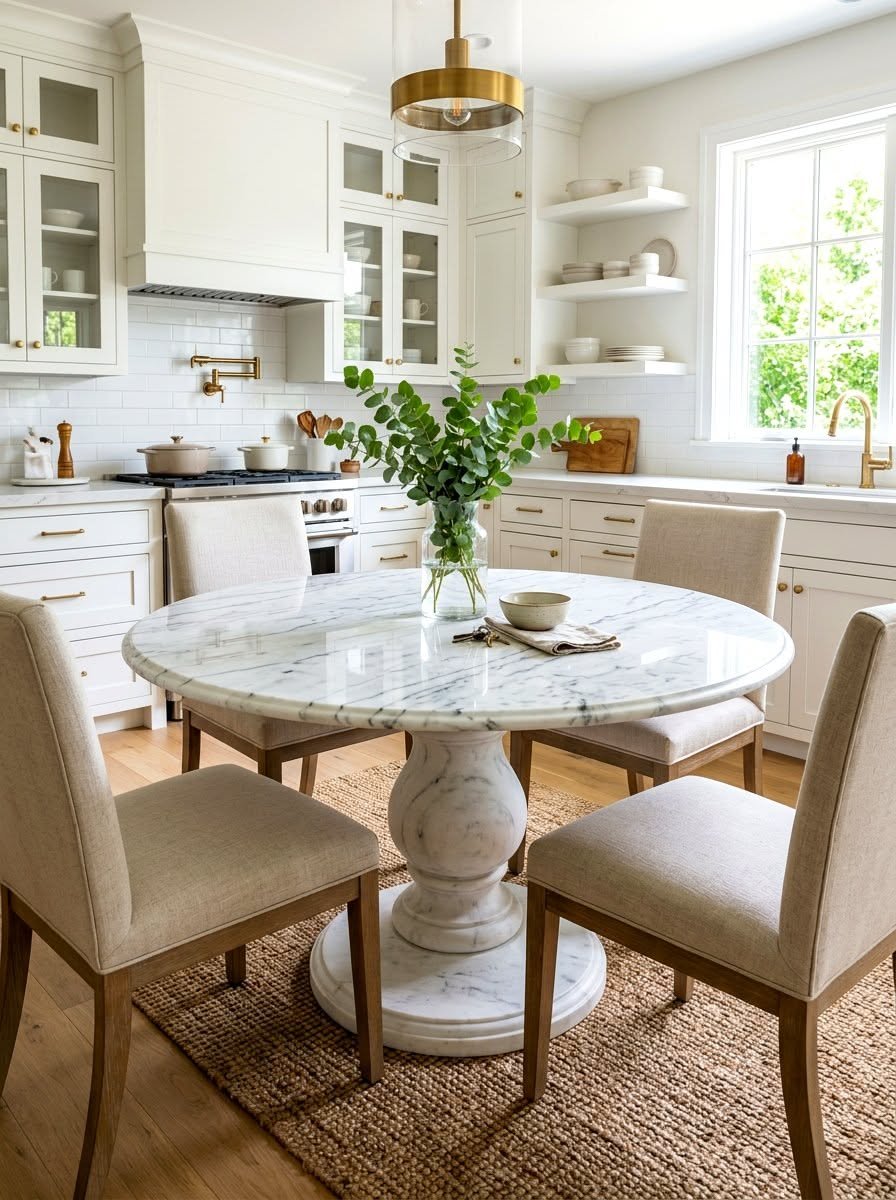
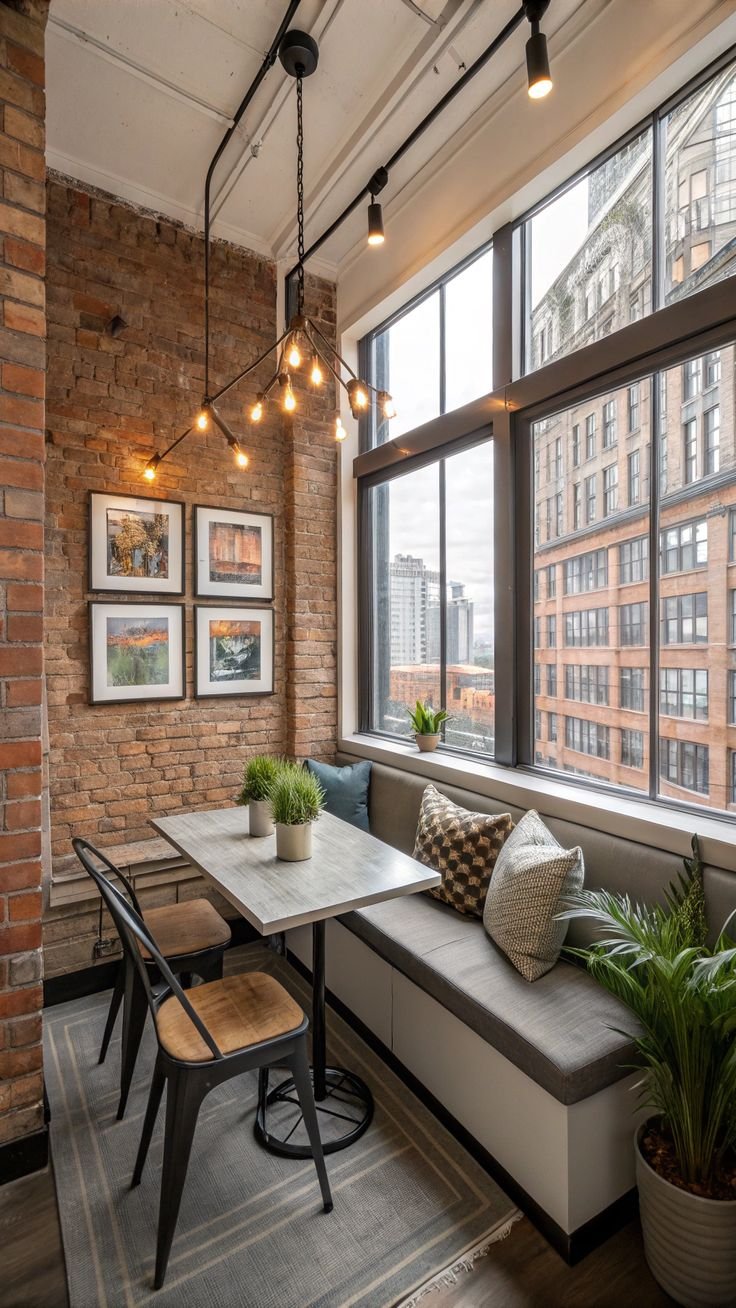
32A City Nook with Brick and Track Lights
A tiny apartment can have a nook. Squeeze a 24-inch table, a slim bench and two stools by a window and call it breakfast. Tuck the stools under the table when you're done.
Track lighting along the ceiling adds light without drilling for a pendant. Aim the heads at the wall to wash it with light, not at the table.
Bare brick sheds dust, so a clear masonry sealer helps. Ask your landlord first. Add a bench cushion to take the chill off a cold wall.
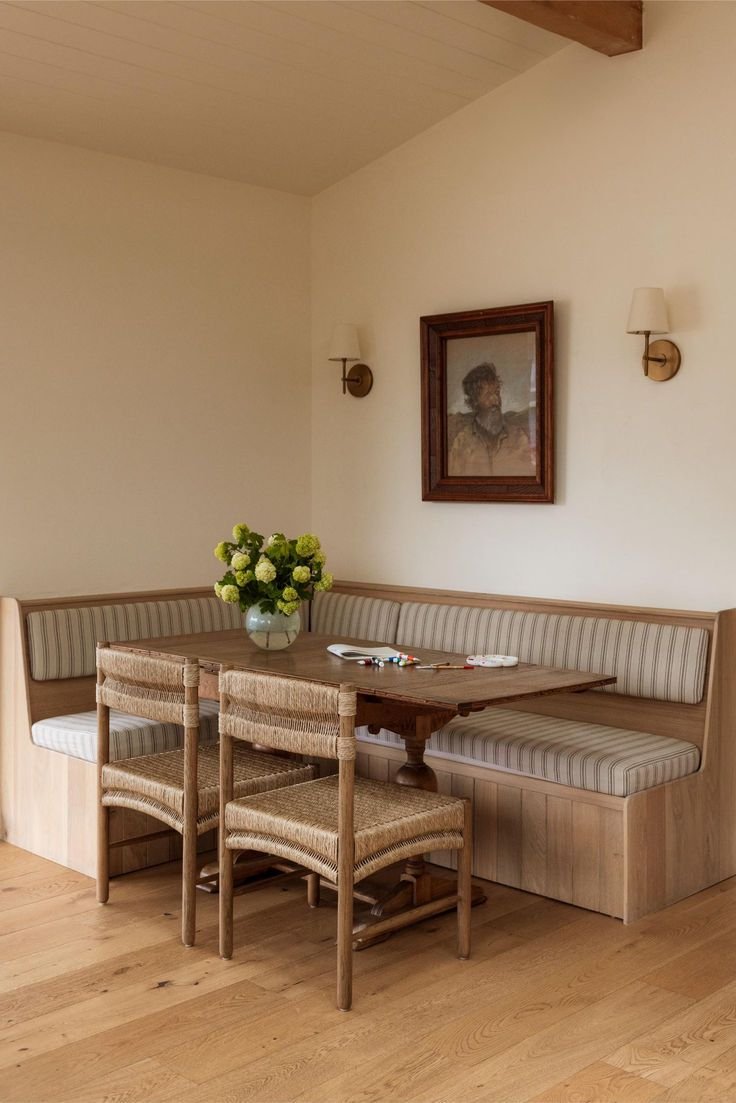
33A Striped Banquette Along a Wall
If you have a long, narrow wall, run a straight bench along it and put chairs opposite. It seats four in a small footprint.
A narrow table, about 30 inches wide, keeps the aisle open. Leave 36 inches between the table edge and the opposite wall. Stripes running the length of the bench make the wall look longer.
Common Mistakes (and Fixes)
- Mistake: Choosing a table that's too big. Fix: Measure the floor and keep 36 inches between the table and any wall or counter.
- Mistake: Soft, thick cushions. Fix: Use firm foam, 2 to 3 inches thick, in a removable cover you can wash.
- Mistake: Hanging the light too low or too high. Fix: Set the bottom of the shade 30 to 36 inches above the table.
- Mistake: Skipping storage. Fix: Use a lift-top bench or drawers so the nook holds what you need.
- Mistake: Choosing delicate fabric. Fix: Pick performance or outdoor-rated fabrics that handle spills and sunlight.
Measure First, Then Style
Before you buy a single cushion, measure the corner, mark the table footprint on the floor, and sit in it. If it feels roomy, the rest is easy.
Add a light, a plant and something soft to sit on, and breakfast will start taking place there.
Filed under