
A small home office fails in two ways: it's so cramped you avoid it, or so cute you can't actually work there. The best ones manage both style and comfort in a few square feet.
I gathered 31 setups, from pink desks and corner nooks to closet offices and wall-to-wall shelving, with the practical details that make a tight space function.
Read the five rules first. They apply to every layout below.
Five Rules for a Small Office That Works
- Size the desk to the wall, not the other way around. A 40 to 48 inch desk with 20 to 24 inches of depth fits almost any nook and still holds a laptop and a notebook.
- Light the desk from the side. A window to your left or right avoids screen glare, and a task lamp on the opposite side fills in shadows.
- Build up, not out. Shelves 12 inches deep, mounted from about 15 inches above the desk, give you storage without using floor.
- Give every surface one job. Keep the desktop for the laptop, one lamp and one notebook. Everything else lives in a drawer or basket.
- Pick a chair for comfort first. A pretty chair you can't sit in for two hours becomes a coat rack. Check seat depth, height range and back support.
Pink and Feminine Desks
01A Blush Desk with Soft Texture
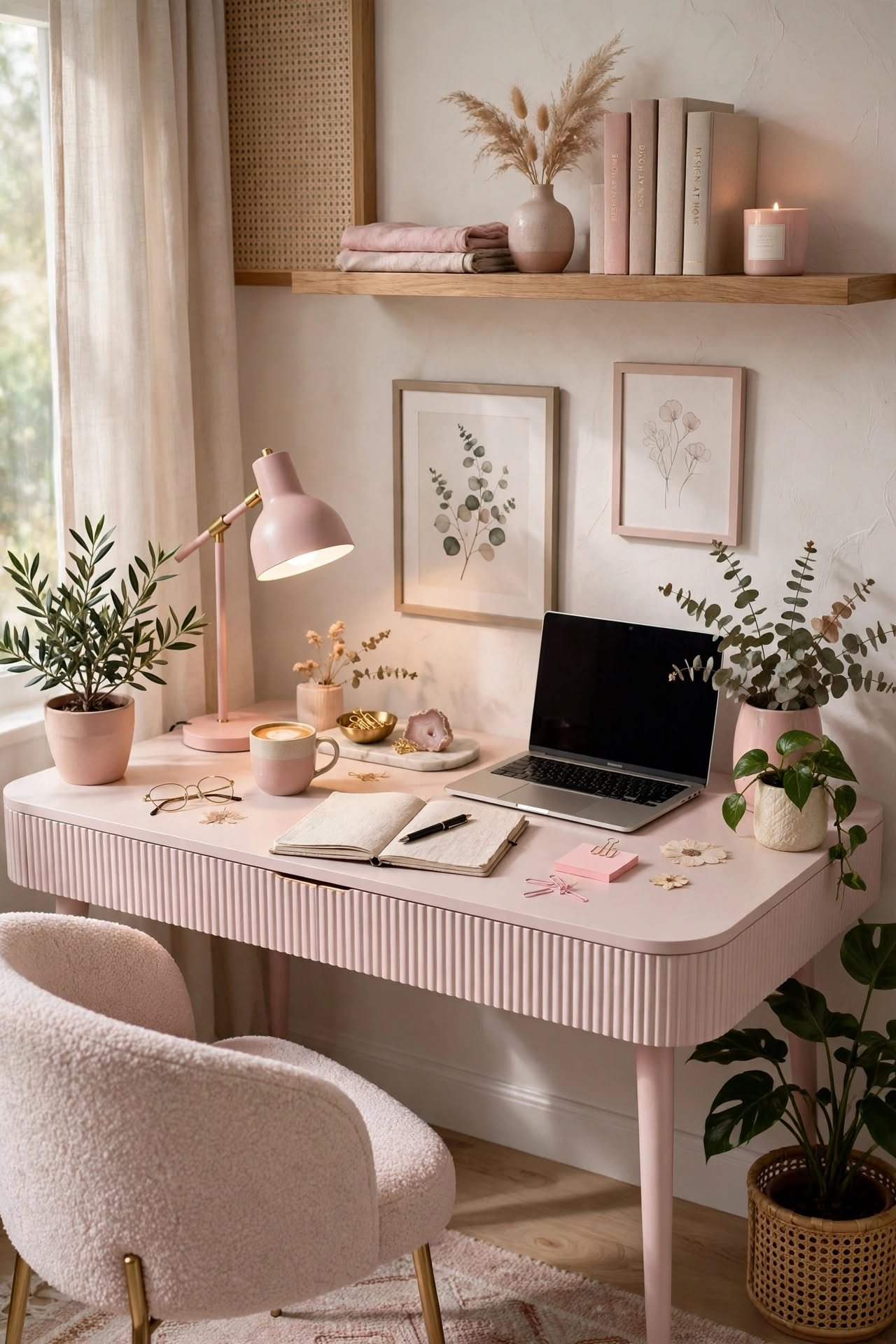
Pink works in an office when you keep it pale and give it texture. Choose a dusty blush over bubblegum, since the grayer tone reads as calm.
Repeat it only three times: desk, lamp, one accessory. A boucle chair adds softness so the color never feels sugary.
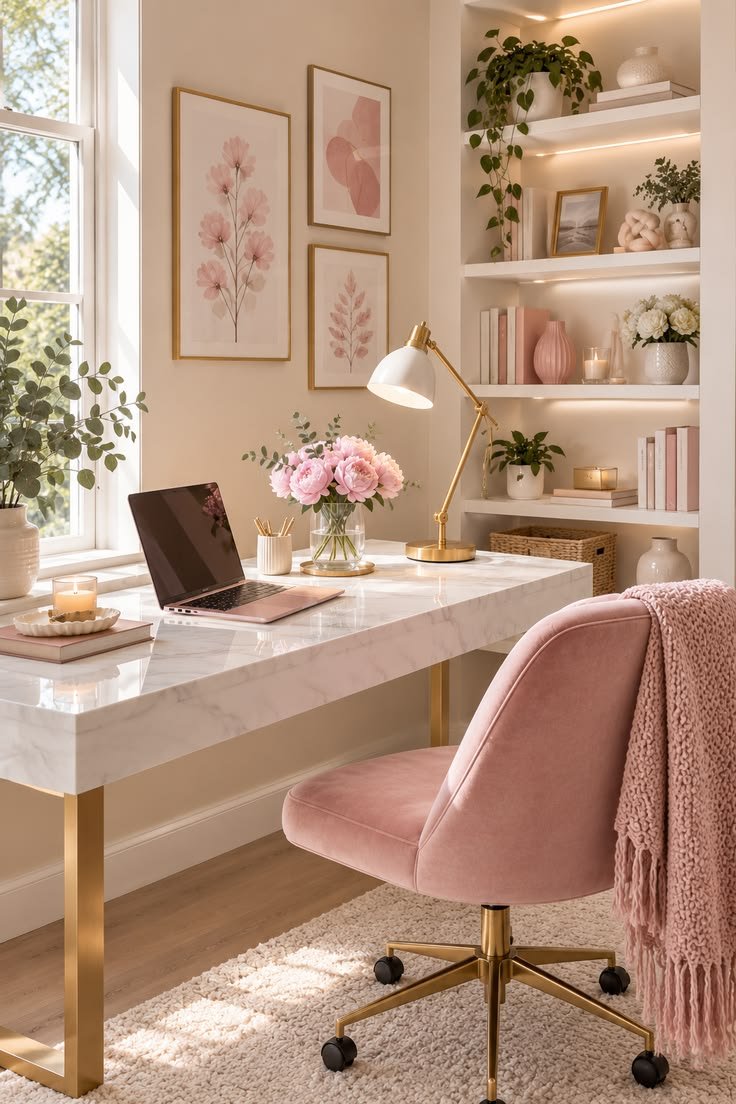
02A Marble-Top Desk with Brass Legs
Want a desk that looks expensive for less? Use a marble-look laminate top on brass-finish legs.
The shine bounces light around a small room, which helps a corner with one window. Check that the top is at least 24 inches deep so a laptop and a notebook fit.
Add a velvet chair in a muted pink and a knit throw over the back. I like a chair seat height of 17 to 19 inches so your feet rest flat.
Wipe laminate with a barely damp cloth and dry it right away. Standing water can lift the edges.
03Pink Walls with Picture Frame Molding
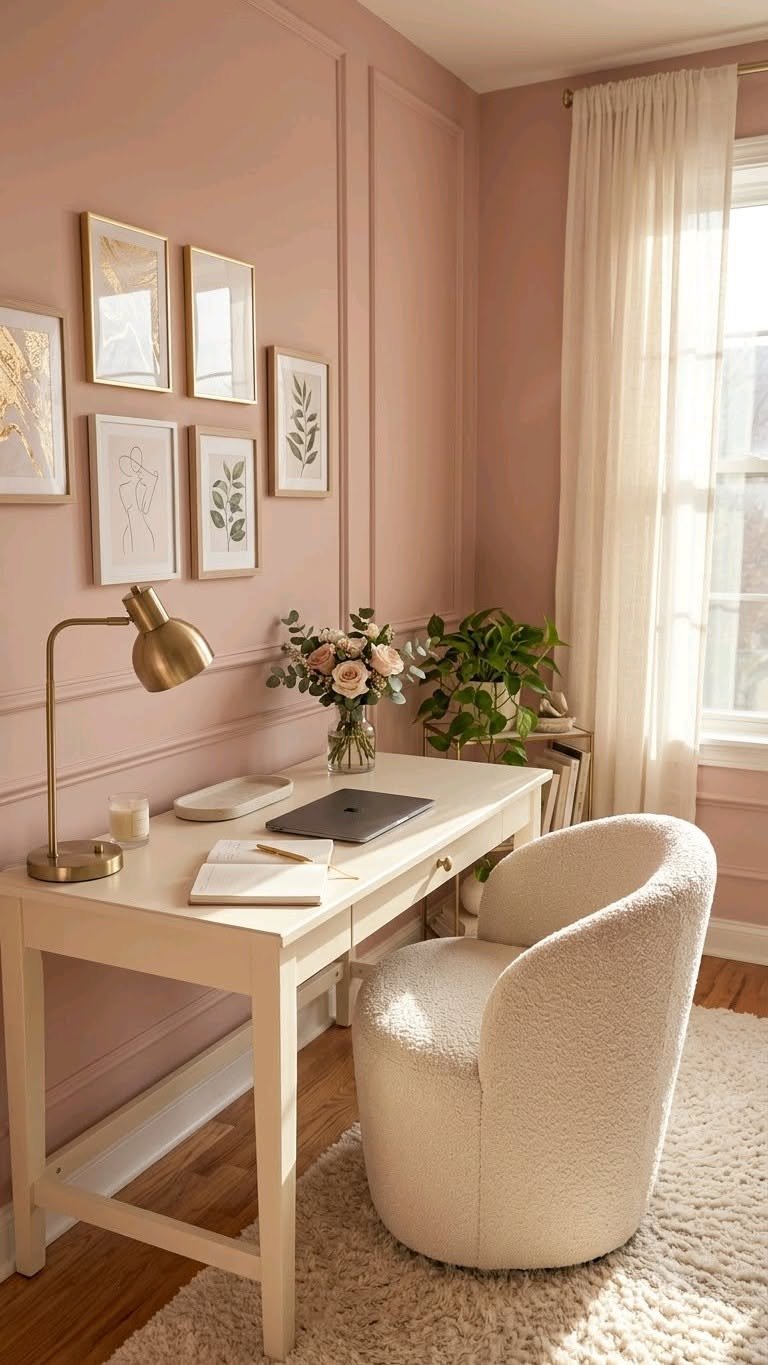
Paint can do more than furniture. A soft pink wall with simple wood molding squares costs under $100 and makes a plain desk look built-in.
Pick a warm pink with a gray undertone so it doesn't turn salmon in afternoon light.
Test a sample on two walls first, and look at it at morning, noon and evening.
04Fresh Flowers on a Window Desk
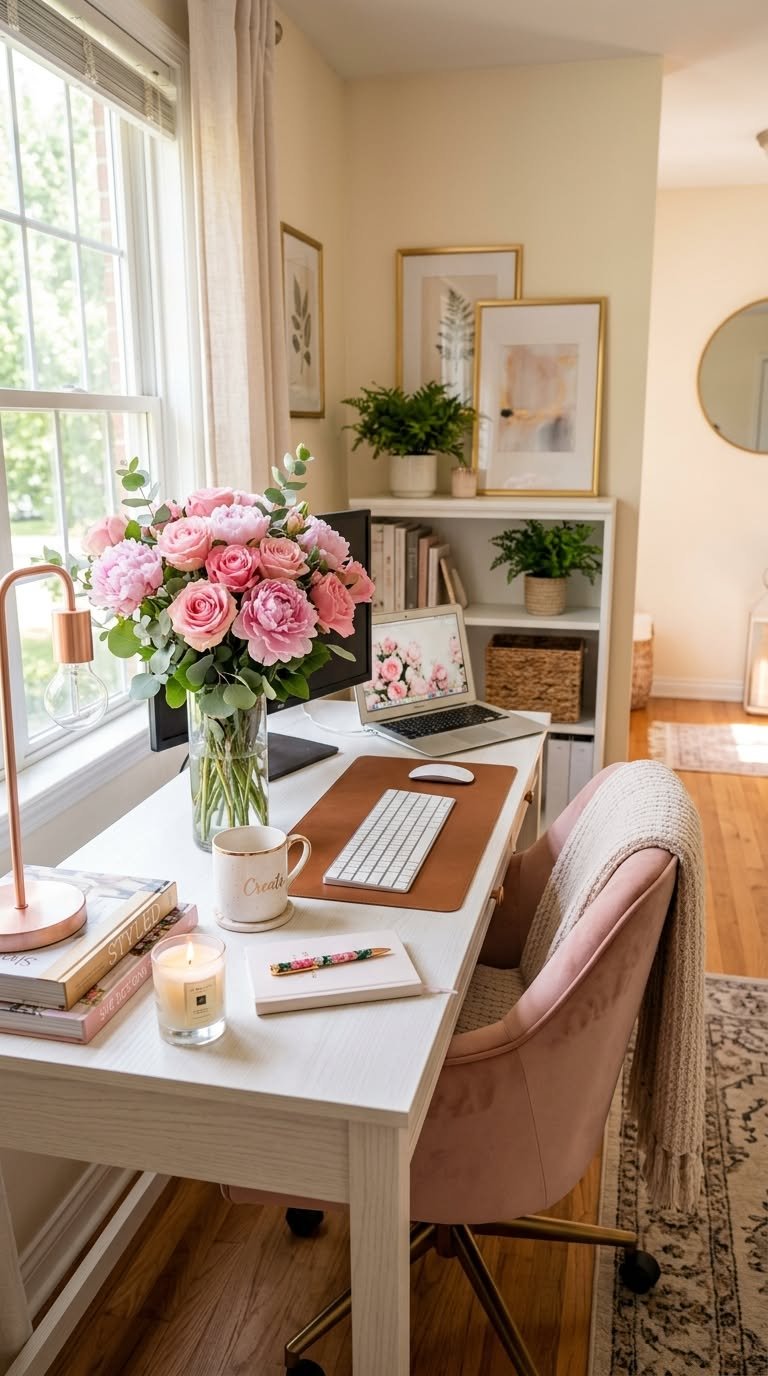
A desk facing a window is worth more than any accessory. Natural light cuts eye strain and lifts your mood.
If glare hits the screen, turn the desk so the window sits to your side, not behind you.
A small vase of peonies or grocery-store roses is a cheap lift. Change the water every two days and keep the vase away from the laptop.
05Two Chairs and a Gallery Shelf
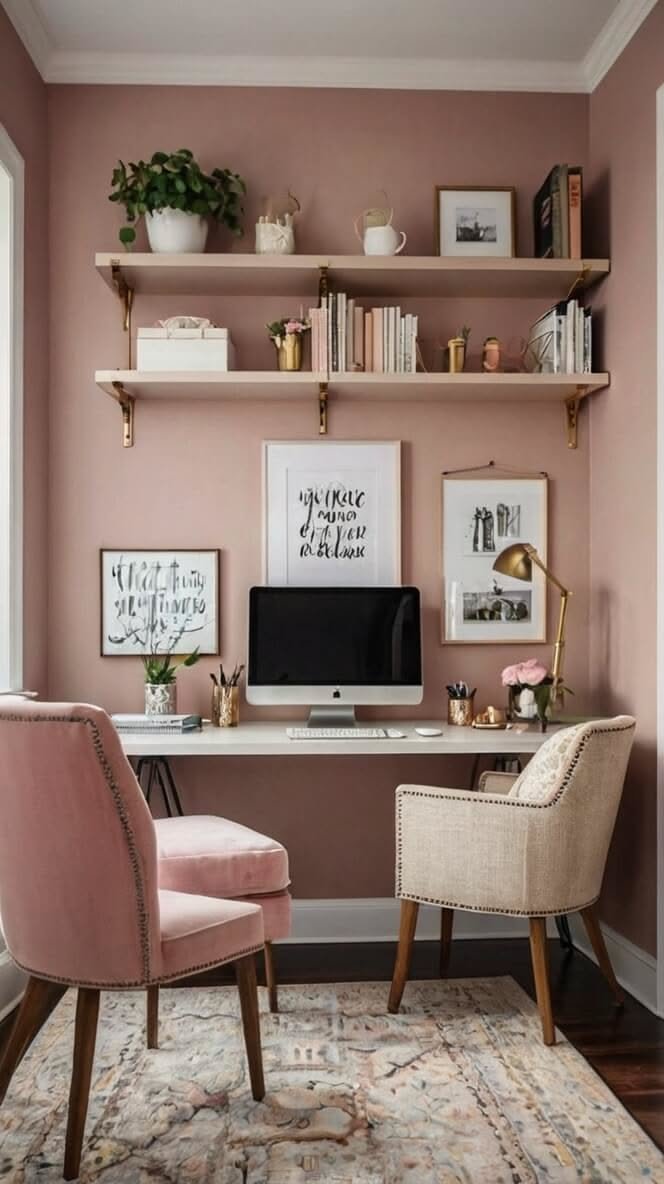
A second chair turns a work corner into a place for coffee with a client or a friend. Keep it armless so it tucks under the desk.
Two shelves above the desk, spaced about 14 inches apart, hold books and frames without crowding the wall. Keep the heaviest books on the lower shelf.
Mount into studs, or use anchors rated for the weight you plan to load. Leave a few gaps between books and frames so the wall can breathe.
Stand a frame or two on the shelf instead of hanging everything. It makes changing the display a two-minute job.
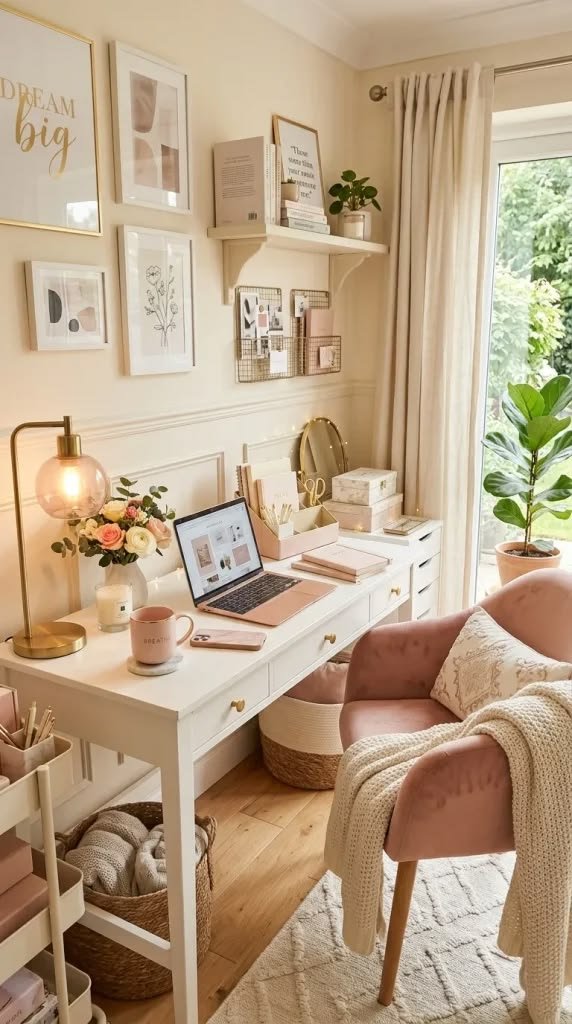
06Dream Big Wall Art Over a White Desk
Motivational art works when it's quiet. Use one or two prints in a neutral palette with a single quote, and let the rest be botanical or abstract.
A small rolling cart tucked beside the desk keeps supplies at hand and rolls away when you finish. Pick one with three tiers so paper, pens and a charger each get a level.
07Backlit Shelves and a Long White Desk
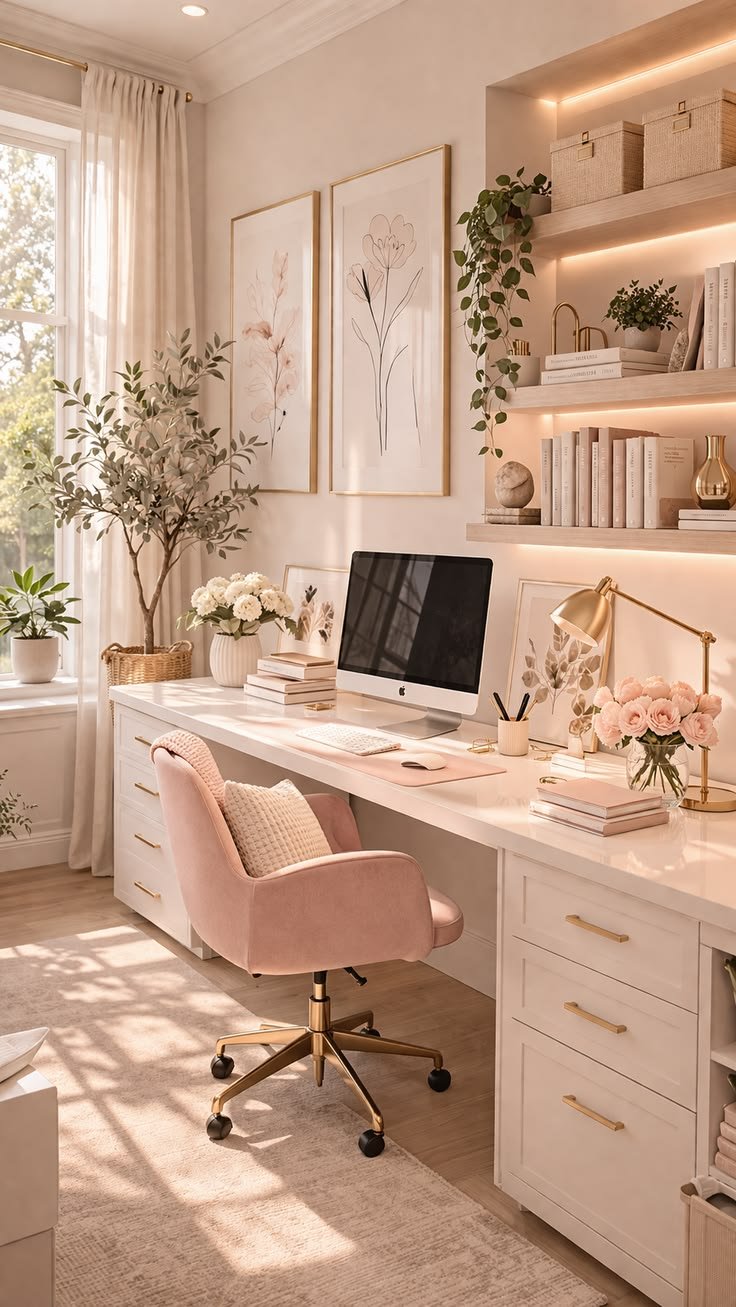
Light the shelves, not the room. Under-shelf LED strips give a built-in look for about $20.
Choose warm white (2700K) and a plug-in strip with a dimmer. Cool white makes pink and wood look flat.
Keep the desktop clear except for the monitor and a lamp. The shelves hold the clutter.
Stick the strip on a clean, dry surface and run the cord down the back corner. Use clips, not staples, so you never nick the wire.
08A Vintage-Style Desk with Floral Art
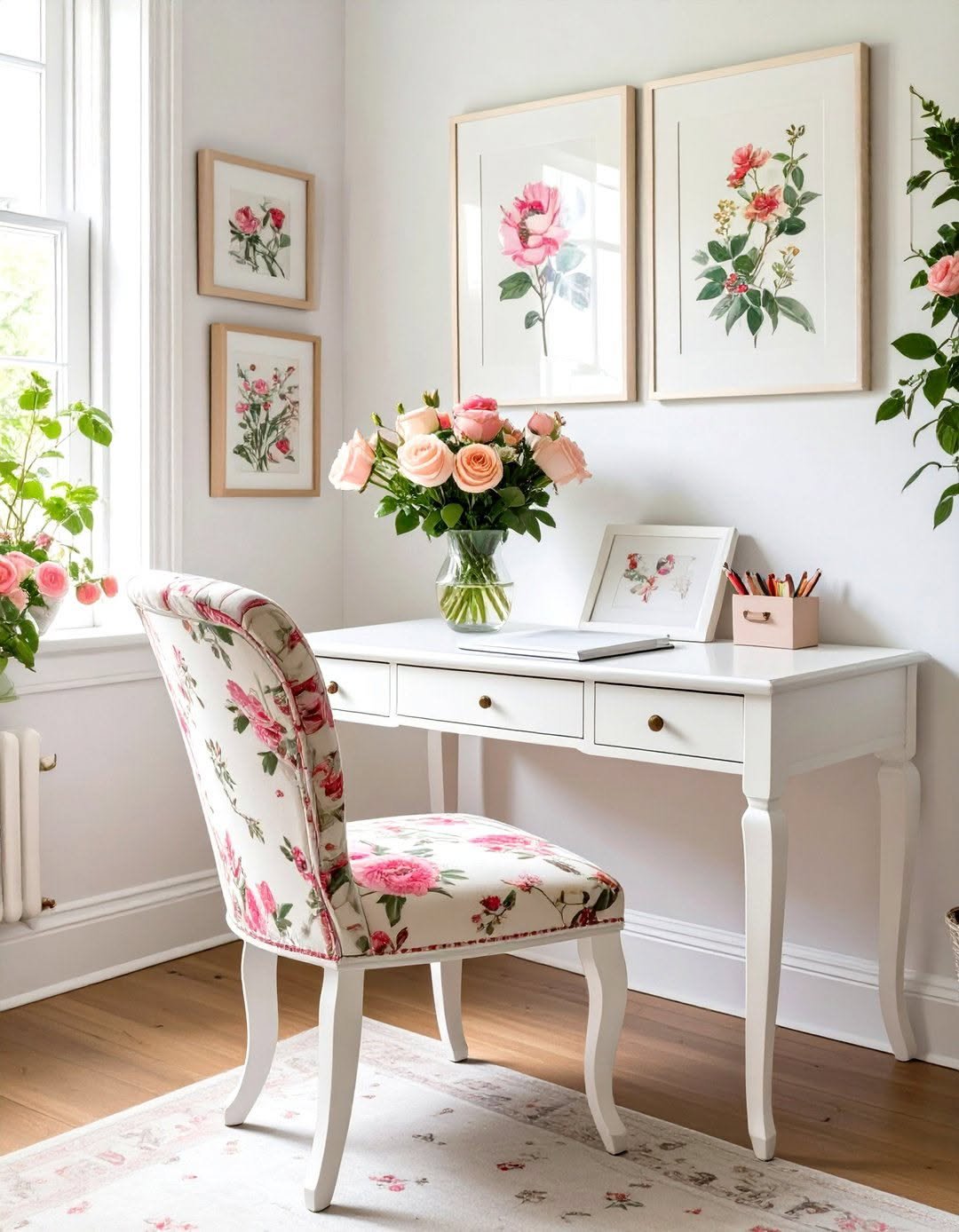
A small writing desk with slim legs makes a room feel bigger, because you can see the floor underneath.
Hang botanical prints in matching frames, about 2 inches apart.
Cover the chair seat in a washable fabric, since desk chairs get daily wear. A removable cushion cover is easy to launder.
09Slatted Wood and Pink Walls
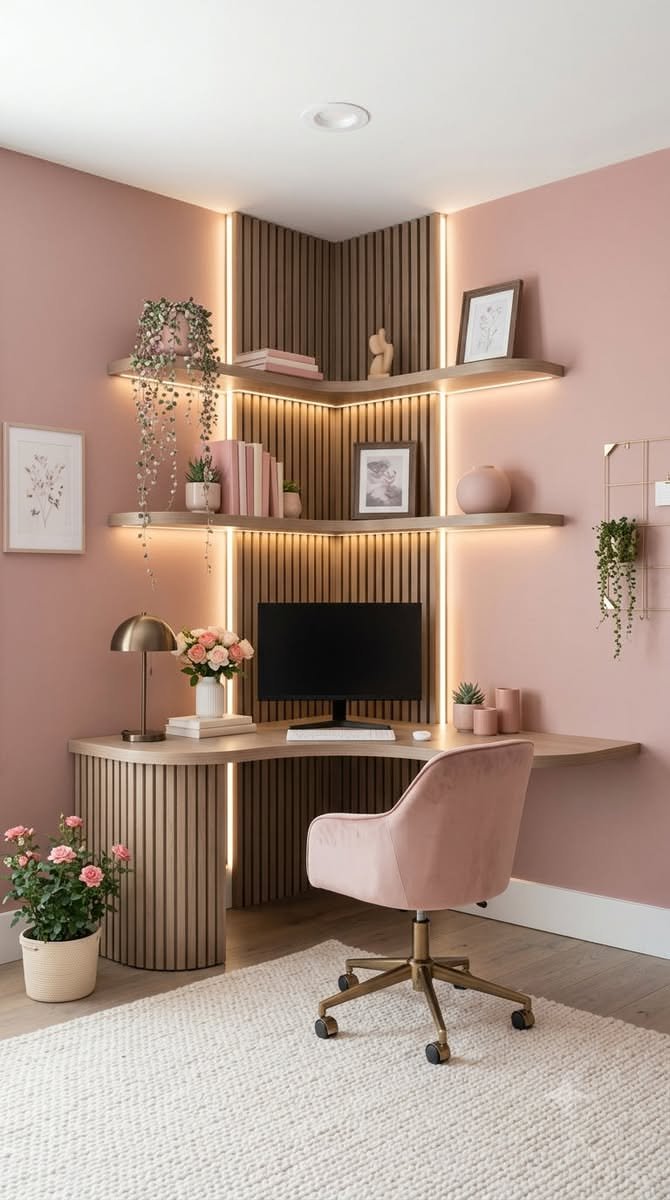
Wood slats are the quickest way to warm up a pink room. Peel-and-stick slat panels work on rented walls and install in an afternoon.
Measure the wall first and buy about 10 percent extra for cuts. Press each panel firmly for a full minute along the edges.
I would run a warm LED strip behind the corner shelves. The glow doubles as a desk light on dark afternoons. Keep the strip clear of stacked paper, and choose LEDs, which stay cool.
Add one pink accent near the slats so the two colors feel linked.
Corner and Floating Desks
10A Curved Corner Desk with Wood Slats
Corners are wasted space in most rooms. A floating L-shaped desk uses both walls and leaves the floor open for a chair.
Mount it into studs with heavy-duty brackets, and keep the top at 29 to 30 inches high.
A curved front corner is kinder to hips and knees in a tight room.

11A Floating Desk with Stair-Step Shelves
Never assume a tiny nook is too small. A 36 by 18 inch shelf desk fits a laptop and a notebook, with no legs to bump into.
Stack three shelves above it, spaced about 14 inches apart. Keep the top one for light objects and the heavy books lower, closer to the brackets.
Find the studs with a stud finder first. Anchors alone won't hold a desk plus a laptop, and keep upper shelves 8 to 10 inches deep so you don't hit your head.
Hide the charger cord with a cable clip along the edge. I always sit at the finished desk before I commit to the shelf height.

12A Wood Desk Under a Window with a Pinboard
A pinboard keeps notes off the desk. Cork or linen-covered boards in a neutral tone look polished next to wood.
Place a lamp with a dome shade on the far corner so the light falls across your work, not onto your screen.
Use push pins in one color so the board stays calm. Pin only what you need this week.

13A Slim Desk in a Bedroom Corner
A bedroom desk needs a visual boundary so work doesn't follow you to bed. A rug under the chair and a tall plant beside the desk mark the zone.
Face the desk away from the bed if you can. Pick one with a drawer so papers go out of sight at the end of the day.
Keep it 18 to 24 inches deep so it doesn't eat the walkway. Close the laptop and slide the chair in each evening.

14A Light Wood Desk and Floating Shelves
In a small room, light wood and white walls keep the space airy. Wall-mounted shelves free the floor around the desk.
A basket under the desk holds cables and chargers so nothing trails across the floor. Pick a basket with a lid if you have pets, since cables are chew targets.
Tape a label inside so you know which cord is which. Light wood forgives dust and fingerprints better than dark finishes do.

15A Walnut Shelf Desk by a Sunny Window
A wall-mounted desk only needs to be deep enough for a monitor, about 20 inches. Walnut looks richer than laminate and hides scratches.
Clip a monitor light bar on top. It saves desk space and lights the keyboard without a lamp.
Set the screen an arm's length away, with the top edge at or just below eye level. Keep a sunny window to the side so the screen doesn't wash out.
Oil walnut once a year to keep the color deep.

Closets, Nooks and Alcoves
16A Hallway Alcove Turned Office
Look for dead space: a wide hallway, a niche or a former reading corner. An alcove only needs 36 inches of width for a desk.
Install a plug-in strip with a USB port inside the alcove so you don't run cords across the floor.
Paint the back wall a shade darker to frame the desk like a room of its own.
Add a wall sconce if the hall is dim.
17A Closet Office with a Pegboard
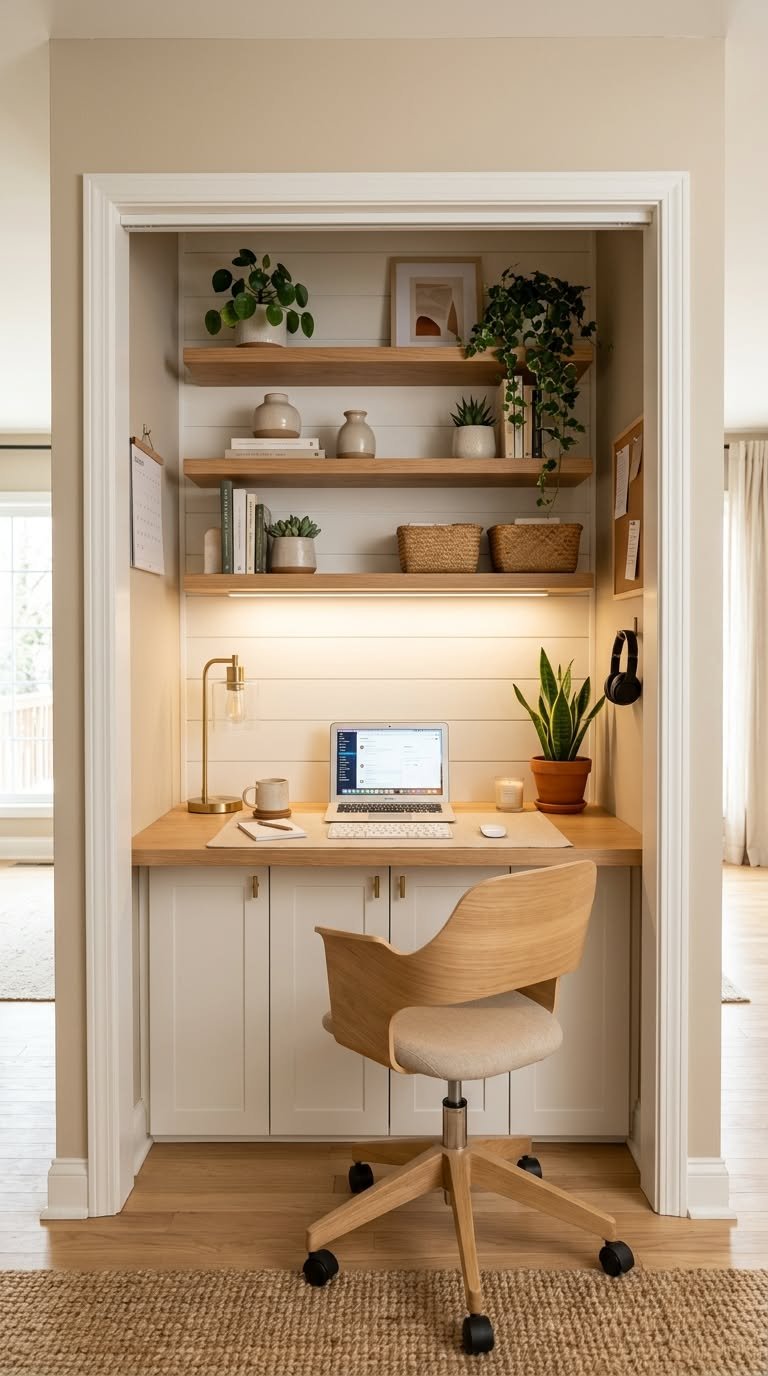
A closet makes a good office because you can shut the doors on a messy day. Remove the rod, cut a shelf at 29 inches for the desktop, and add a 15-inch shelf above it.
You need at least 20 inches of depth for a keyboard and wrist room. Drill a hole in the back for cables.
Add a battery puck light if there's no outlet. Hang a small pegboard on the side wall for scissors and tape.
Leave the door open while the laptop charges so heat doesn't build up. Clear the desk at day's end and the doors close on a tidy closet.

18A Built-In Nook with Drawers and a Bench
Standard storage units can look custom. A white drawer cabinet as the desk base and a cushioned bench for guests uses the corner fully.
Cover the wall above the desk with a pegboard to hold scissors, tape and earbuds. Line drawers with a non-slip mat and use small dividers so pens never roll.
Add trim along the top and sides of the cabinet and paint it all one color. That one step makes it look built-in. Check that the bench is 16 to 18 inches high for comfortable sitting.
Caulk the gap against the wall so crumbs and dust can't hide.

19A Fold-Down Desk That Hides Away
If the room has to serve two jobs, use a desk that folds flat. A drop-leaf wall desk gives you 24 inches of depth for work and zero when closed.
Choose hardware rated for at least 50 pounds and mount into studs.
Fold-down desks need a tidy routine. Keep a basket on the shelf below for the laptop and cords. Leave 24 inches of clear floor in front when the leaf is open.
Always lift the leaf slowly so it doesn't slam on your fingers.

20A Narrow Room with a Desk and a Reading Chair
Don't fight a narrow room. Run the desk along one wall and keep a clear 36-inch aisle.
That leaves space for a chair on the other side. A runner rug that follows the room's length makes it feel wider.
Pick a runner about 8 inches narrower than the aisle so floor shows on each side.
Put the reading chair by the window, where the light is best. A small side table holds a cup and a book.

Walls, Shelves and Storage
21A Mood Board Wall in Sage Green
Build one large board instead of a dozen small notes. A 3 by 4 foot cork panel with a few frames on top looks planned.
Keep colors in the board to two or three, and change the cards monthly so it stays useful.
Sage green behind cork is calm and doesn't compete with the notes.
Cork tiles are the cheap route: stick them up and frame the edges with thin trim.

22A Gallery Wall Above the Desk
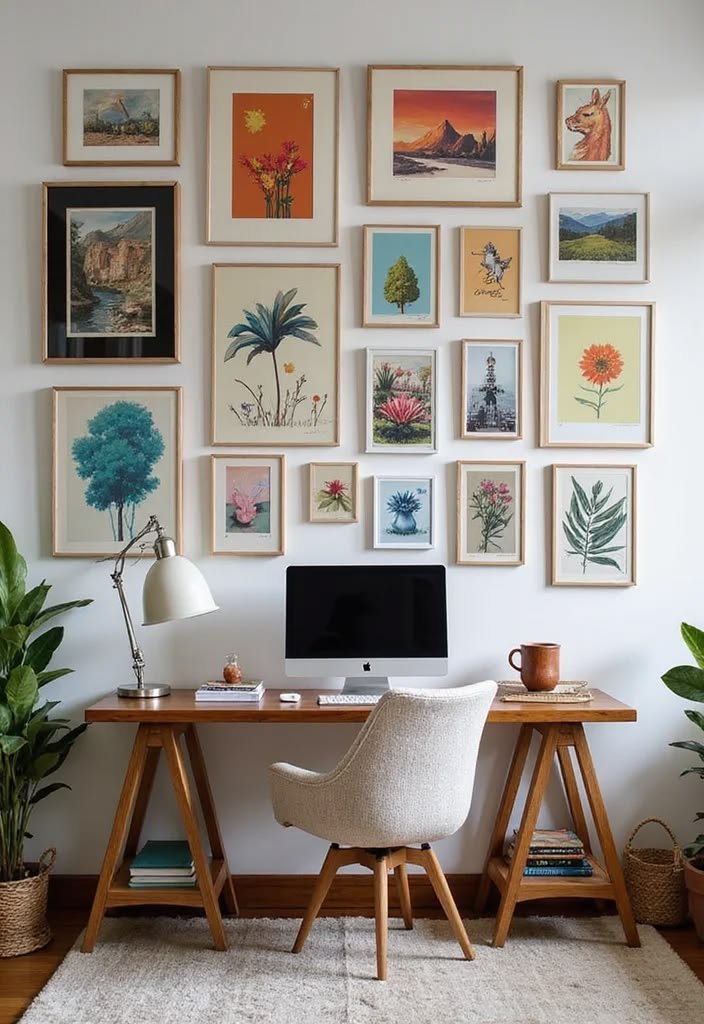
A gallery wall adds personality without taking floor space. Lay the frames on the floor first, then trace paper templates on the wall.
Keep two inches between frames and make the whole group about two-thirds the width of the desk.
Mix frame colors, but repeat one finish at least three times so it feels deliberate. Hang the center of the group at about 57 inches from the floor.
Use painter's tape on the template so you can move it without marking the wall. Start with the biggest piece and build outward.
23A Study Desk with a Wall of Notes
Students and freelancers both need a visible plan. Clip note cards to a string with mini clothespins instead of nailing up a board.
Use two strings: one for this week, one for the month. Hang them at eye level, about 15 inches above the desk.
Two small removable hooks do the job on a rented wall. Check the weight rating and keep the cards light.
Keep a planner open to the current week and put the rest on a shelf. Review it each Friday and take down anything done.

24A Desk That Doubles as a Vanity
One long desk can serve work and getting ready if you split it in half. Keep the monitor side and the mirror side separate.
Use a monitor riser with a drawer for chargers, and a small tray for makeup so the surface stays tidy.
Put the mirror by the window so you get daylight on your face. Keep makeup out of direct sun, and clean brushes weekly so powder doesn't build up. A 24-inch mirror is enough for most people.

25Built-In Bookcases and a Reading Bench
Floor-to-ceiling shelves on one wall add storage without feeling heavy if you paint them the same color as the wall. Skip pure white when the wall is a color. A matching paint makes the unit read as part of the architecture.
Add a cushioned bench at one end for reading and use the shelf lights on a timer. A plug-in timer set for dusk to bedtime saves energy and sets a mood.
Leave 12 inches between shelves for large books and 10 inches for paperbacks. Anchor tall units to the wall with a tip-over strap.
Fill the lower shelves with baskets so the clutter stays closed away.

Neutral and Grown-Up Styles
26A Wood Desk with Brass Hardware
Brass pulls make a basic desk look custom. Swapping hardware takes ten minutes and costs about $15.
Measure the distance between screw holes before you buy so the new pulls fit the old holes.
A rug large enough to hold the chair legs makes the whole area feel designed.
Aim for a rug at least 5 by 7 feet.

27A Cream Palette with Texture
An all-cream office gets interesting through texture. Combine boucle, jute, linen and wood so the room has depth without color.
Choose a woven roman shade for the window to soften daylight and cut screen glare.
Use three to four textures only. Five or more starts to feel busy. Vary the scale: a chunky jute rug, a fine linen curtain, a nubby chair.
Cream shows dirt, so pick performance fabrics or washable covers for the chair. Keep the shade at the window frame level so it lines up neatly when raised.

28A Gold-Accent Gallery Corner
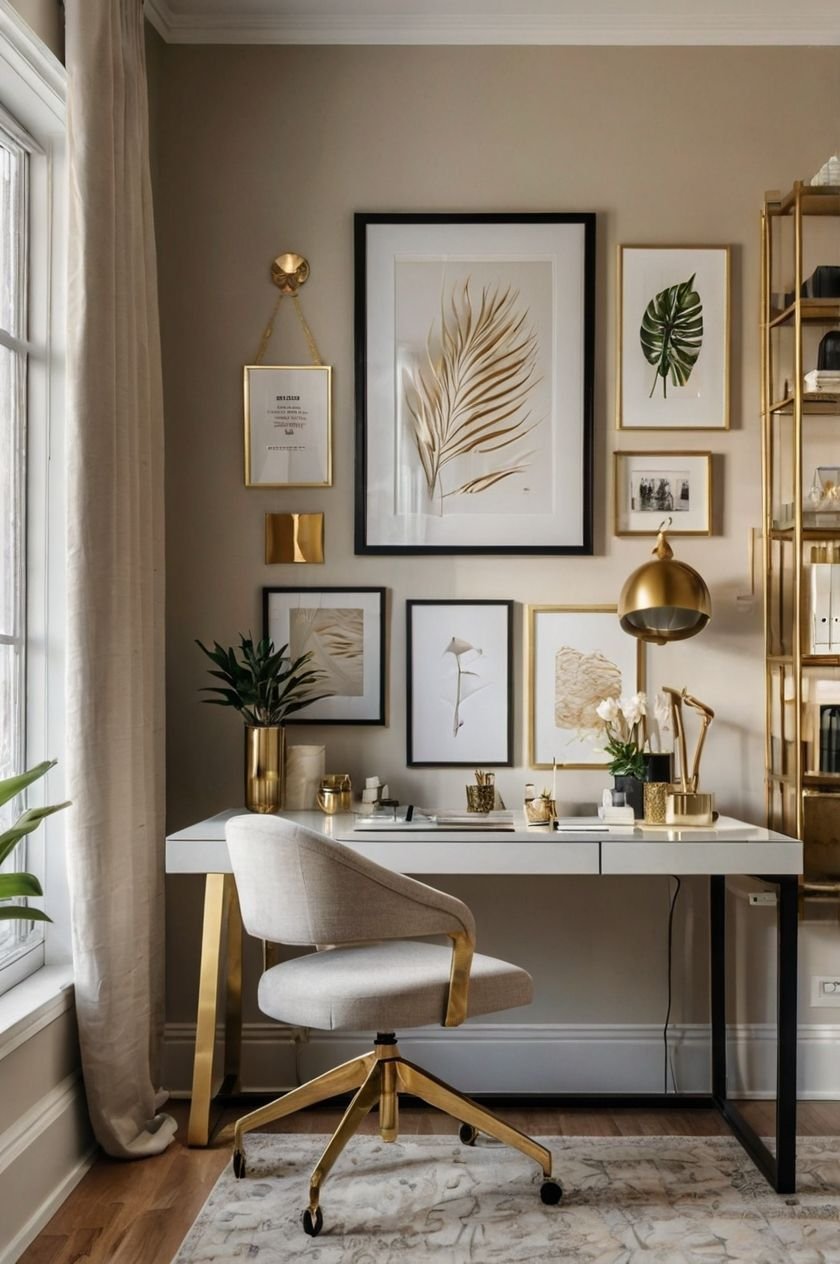
Pick one metal and stick with it. Gold hardware and frames add shine in a small room, but mixing finishes can look random.
Hang art at eye level when seated, about 40 inches from the floor to the center.
Check that gold tone matches. Warm gold clashes with cool brass. Use a gold chair as the one bold piece and keep the rest quiet. A can of gold spray paint refreshes tired frames for about $8.
29A Warm Wood Wall Desk with Shelves
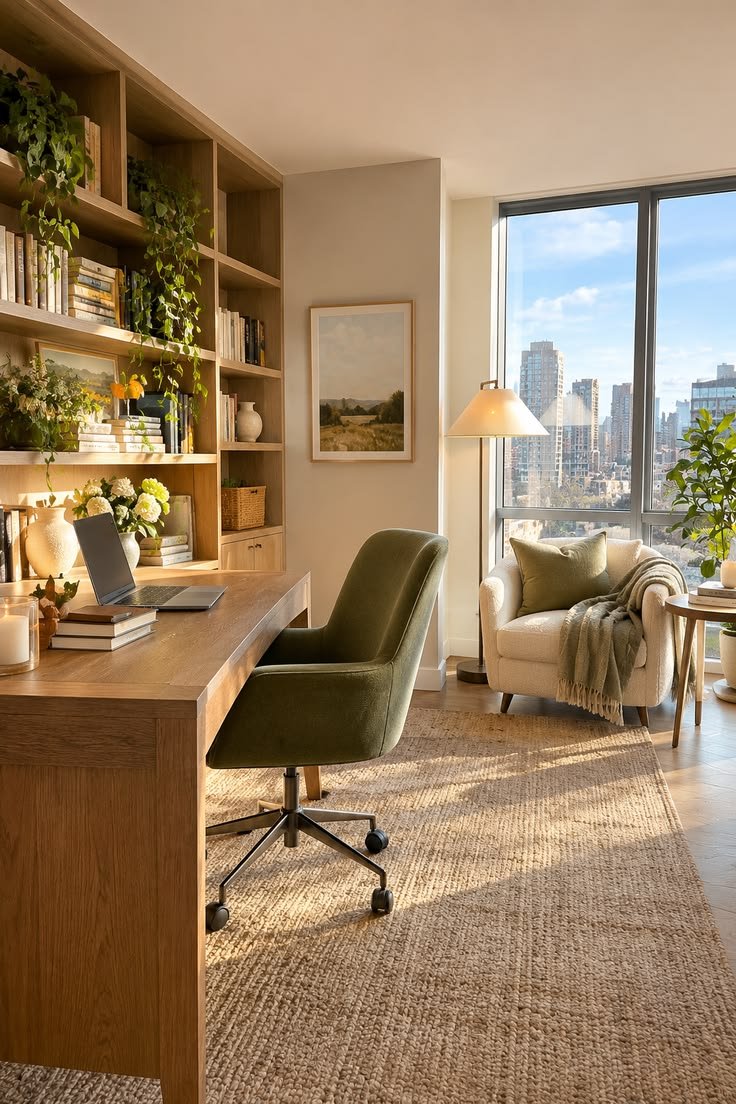
A long built-in shelf unit can replace a bookcase and a desk. Pair oak with an olive chair for warmth.
Plan the desk section at 29 to 30 inches high. Add a cabinet door or two at the bottom for things you don't want to see.
Seal oak with a matte finish to resist scuffs. Group books by color or size to keep the shelves calm.
Leave a few shelves partly empty so the books don't dominate the room. Prop a decorative piece on a stack of books for height.
30A Sage Green Study with a Vintage Desk
An antique desk gives a small office history. Look for one under 48 inches wide at a flea market or estate sale.
Open every drawer to check that it slides, and skip anything that smells of mildew.
A patterned rug and a woven chair soften the wood. Choose sage or olive paint to match.
Wax the top once or twice a year. Never sand a real antique, because it can lower its value.
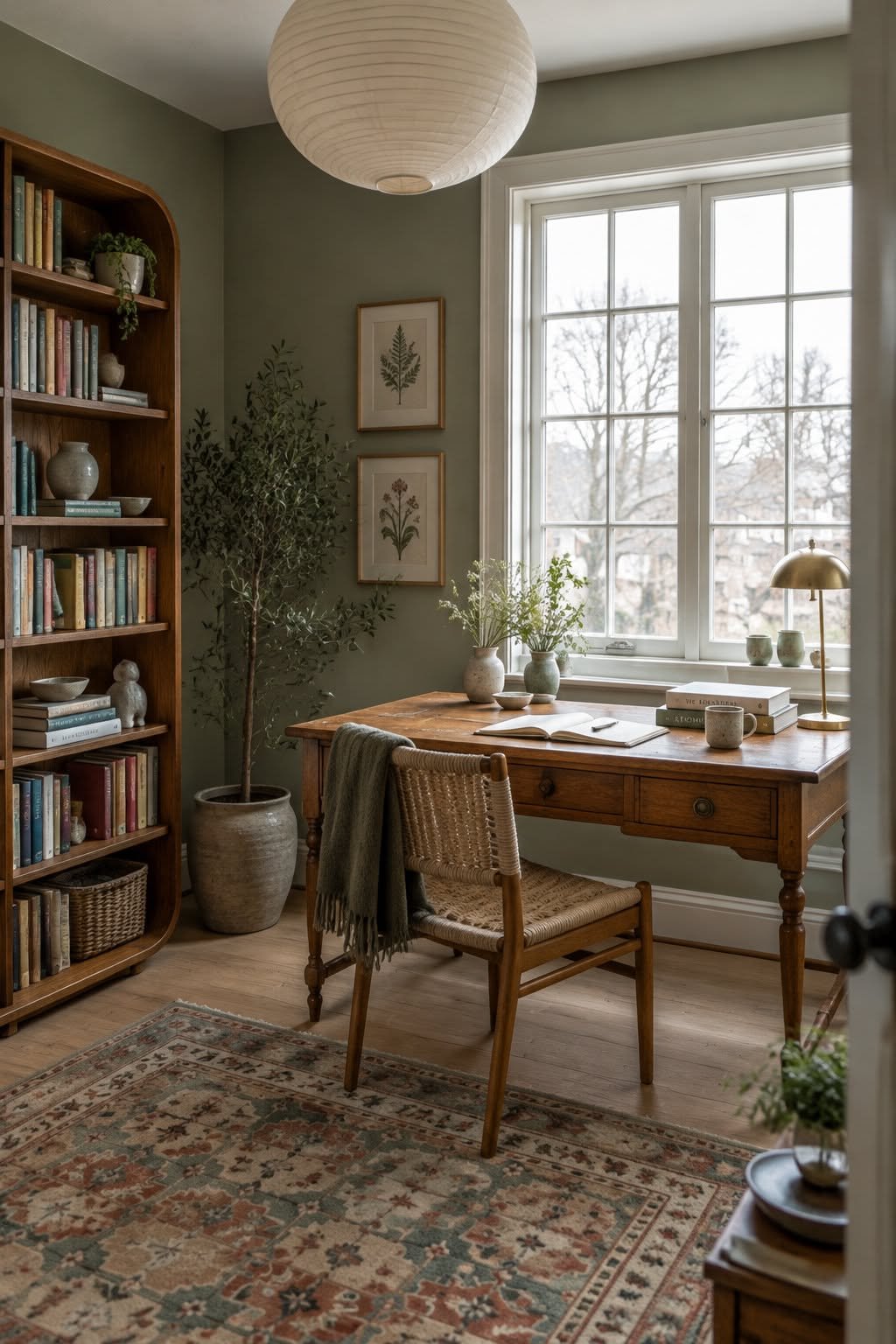
31A Calm Office with Built-In Shelving
A built-in with warm lighting makes any room feel finished. Fill about two-thirds of the shelves and leave the rest empty.
Place the desk perpendicular to the window so the light falls on your side. Use lights at 2700K for a cozy glow.
Cheap stock cabinets with trim can look built-in. Paint the whole unit and the wall behind it one color. Add a dimmer so you can go from task to evening.

Common Mistakes (and Fixes)
- Mistake: Buying a desk that is too large. Fix: Tape the footprint on the floor first and leave at least 36 inches behind the chair.
- Mistake: Working with the screen facing a window. Fix: Turn the desk so the window is on the side.
- Mistake: Relying on a ceiling light alone. Fix: Add a task lamp with a warm bulb at about 2700K to 3000K.
- Mistake: Leaving cords on display. Fix: Use a cable box and adhesive clips along the desk edge.
- Mistake: Choosing a chair for looks only. Fix: Sit in it for ten minutes before you buy. Look for adjustable height and lumbar support.
Start With the Light and the Chair
You don't need a spare room to build a good office. A desk that fits, a chair you can sit in all day, and a lamp pointed the right way do most of the work.
Add color and art last. They matter, but the setup has to function before it can be pretty.
Filed under